












Behavioural economics has all the answers when it comes to making a significant difference to the success of campaigns, new product launches and customer loyalty.
So you’re about to launch a new product on your shelves. There’s a clear market for it, it’s the right price and customers really liked it during the research phase.
Then you launch it and it fails to sell. So what went wrong? Are the customers to blame?
Well, no. It turns out we’re actually not very good at knowing what drives our own behaviour and what we say in focus groups is not always a reliable predictor of what we’ll end up doing in the real world.
But there is hope. A relatively new field of research called behavioural economics has been making huge progress in understanding what drives our behaviour.
“It turns out we’re actually not very good at knowing what drives our own behaviour and what we say in focus groups is not always a reliable predictor of what we’ll end up doing in the real world”
In a nutshell, behavioural economics brings insights from psychology to the laws of economics and reveals that we are not always as ‘rational’ as we think we are when making purchase decisions.
Most of the time, conversations about behavioural economics focus on the same few behavioural ‘biases’ that you’ve probably heard of many times.
Like norms, where seeing the most popular choice steers our preferences. And we’ve all seen scarcity at play: “Only one room left at this price.”
So I’ve picked out a few of the lesser-known, but no less powerful, insights:
The effort heuristic
We tend to assume that everything should be as easy and effortless as possible for people. And a lot of the time it is – but not always.
In some settings, more effort is actually better. Did you know that when the cake mix was first invented, all that it required was for water to be added and the cake bake was finished.
After some initial interest, sales started to plateau. Then, working with a team of psychologists, the producers realised that perhaps consumers were feeling a sense of guilt about not doing much to contribute to these cakes.
To allow people to do more, they redesigned the recipe so that you now have to add an egg; sales increased significantly as a result. So next time you’re designing a new product, remember that for customers, sometimes putting more effort into something makes us value the overall experience more.
Mental accounting
Sometimes, we’re totally inconsistent in the way we view money. For some purchases, I really want to save every penny I can. In my case it’s when I’m choosing what butter to buy. And yet my mindset is completely different, even just a few minutes later, when choosing between an £8 or a £15 bottle of wine.
So what’s going on? This is down to mental accounting, the fact that we have different financial ’buckets’ in our heads. And while it makes no ‘rational’ sense, it’s how many of us think.
“Behavioural economics gives us an insight into the irrational forces that often shape our behaviour and these insights can help any business optimise its interactions with customers”
How can you apply this insight? Well, think about in which mental ’bucket’ you want customers to view your product. A really smart example of this is when some ready meals were rebadged as ’dine in for 2 for £10’. Suddenly, customers aren’t comparing this to other – cheaper – ready meals, but to ‘dining out’.
As you can see, behavioural economics gives us an insight into the irrational forces that often shape our behaviour. And the good news is that these insights can help any business optimise its interactions with customers, from supermarkets to insurance companies.
Through our live tests we have found that using behavioural economics can make a significant difference to the success of campaigns, new product launches and customer loyalty.
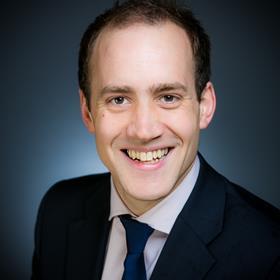
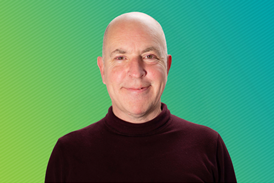
William Trump is behavioural science advisor at iptiQ
Everything Will does revolves around customer behaviour. With a background in predictive analytics, Will helped set up Swiss Re’s Behavioural Research Unit four years ago, which has now run more than 200 trials with insurers around the world, bringing insights from behavioural economics to help insurers optimise their business through rigorous test and learn.