









The ongoing conflict in the Middle East is creating turbulence across the fashion industry, with Next warning the troubles would cost the business three times more than what it had previously estimated.
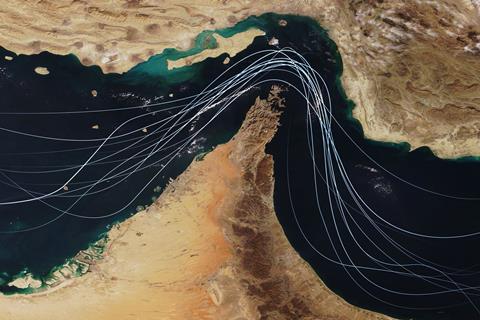
The retail bellwether is now forecasting that the war will cost the company £47m, compared to its previous forecast of £15m, due to high fuel costs, disruption to factories and global transport networks.
Next said its original guidance had estimated the cost of the conflict back in March on “the assumption that the disruption lasts for three months”.
It plans to mitigate these through “moderate” price increases in some international territories and pair them with “operational cost savings” across the entire business.
Meanwhile, the retailer’s European logistics provider and ecommerce giant Zalando reported that it had felt “no measurable impact” from the conflict so far.
It echoes previous sentiments made by Primark and Inditex earlier in the year. However, the latest announcement from Next suggests fashion may be more exposed than previously thought.
What are fashion retailers saying?
Next reported international sales were up 12.8% in the 13 weeks to May 2, 2026, but had fallen 8.9% in weeks six to eight of the period due to disruption to delivery services.
The retailer’s new £47m forecast is based on fuel costs to remain at or around their current levels, and disruption to its supply chain to neither worsen or improve.
It noted that cost increases in its international business mainly relate to increased charges to air freight and local distribution networks.
Other fashion brands have also flagged higher supply chain costs.
Uniqlo owner Fast Retailing upgraded its full-year outlook at the start of last month, but added that its estimates took into account “some impact from the Middle East situation, based on current considerations such as higher transportation costs in some markets”.
The retail giant reported that it had “already progressed production and taken measures on transportation, so no major impact is expected from a production and logistics perspective”.
Meanwhile, the boss of Primark’s parent company Associated British Foods, George Weston, said in its update in April that the longer-term impact of the conflict “is not yet clear”.
“The primary direct impact is energy costs, but there are others, including freight, fabric, packaging and agri-chemicals,” Weston told analysts.
“Given what we know today and given the hedges that we have in place, we expect to be able to manage the cost impacts that we’re seeing through the rest of 2026.”
Zalando is also well prepared, it seems. Chief financial officer Anna Dimitrova shared this week that the business was well equipped with stock and inventory for the upcoming season.
“We had to react to the pandemic. We had to react to the closure of the Suez Canal. We had to react to other limitations and restrictions”
Óscar García Maceiras, Inditex
“We have already stocked up for the spring/summer season 2026 so we don’t see any disruption in our delivery to the customer.
“In terms of other exposure to cost, we don’t foresee material direct impact of the rising energy prices as the conflict persists.
“It’s more an indirect impact and this is why we’re closely monitoring,” she added.
Next announced that the cost increases to its international business would be offset by price increases overseas, coming into effect this month.
It reported that increases will be “no more than +8% in any territory” outside of Europe and that the cost increases on the continent had been offset by currency gains, “so there is no need for price increases”.
Inditex shrugged off concerns in March that the higher shipping costs would be passed onto consumers, with chief executive Óscar García Maceiras saying: “We do not believe that this will have an impact on prices, because our pricing policy is stable.
“We will be able to react and adapt the group’s operational activities to potential restrictions that may come to the surface.
“Back in the day, we had to react to the pandemic. We had to react to the closure of the Suez Canal. We had to react to other limitations and restrictions.”
What’s happening to trading?
Even without the backdrop of the Middle East conflict, geopolitical uncertainty and high inflation has meant consumer confidence was already subdued.
Zalado’s Dimitrova noted: “The European consumer is very price-sensitive and cautious but no more since the Middle East conflict started.
“We are monitoring the situation very closely but we don’t see any measurable impact from the conflict.”
Sales for the group were up 23% to €2.9bn in its first quarter, with average spend increasing to €63.
It’s different to Primark, where Weston suggested the troubles were impacting its performance in the region.
The retailer delivered a 2% increase in revenues for the 24 weeks to February 28, dragged by a 5.6% fall in like-for-likes across Europe.
“We’ve seen what we think is an impact in just the last couple of weeks, the Primark sales really across the whole of Europe and there must be a risk that if the conflict persists, consumer spending will keep on being subdued.”
Next revealed it had seen a direct impact on its international performance due to delivery challenges. A strong 26% start to the period turned into an 8.9% fall in weeks six to eight as the conflict began.
Similarly, Inditex’s Maceiras noted in the group’s most recent update that its stores in the UAE and Israel region had experienced little impact so far aside from when it first began.
“The impact so far on sales has been limited. Please do remember that in those markets, we run our franchises,” explained Maceiras.
“On some days at the beginning of the conflict, some of the stores had to close, but for the most part, our network of stores is now open.”
While it seems that trading has resumed as normal for fashion brands operating in the Middle East, the greatest pressure on the industry is whether it can keep its transportation costs down and avoid passing these on.
As ever, the sector continues to deal with an increasingly fragile consumer. However, with rocketing inflation in other parts of the economy, this could negatively impact their appetite to spend on clothing and accessories.
No comments yet