










UK customers were very value-conscious in the month of April, amidst the ongoing uncertainty around the situation in the Middle East, even as grocery inflation fell.
Like-for-like grocery inflation fell to 3.8% in the four weeks to April 19, 2026, the lowest level seen since April 2025, according to the latest grocery market share data from Worldpanel by Numerator.
Worldpanel head of retail and consumer insight Fraser McKevitt said the dip in inflation shows that the impact of the ongoing conflict in the Middle East has “not yet” filtered through to prices on supermarket shelf edges.
Despite this, Worldpanel noted that UK shoppers increasingly sought out deals due to concerns over rising prices, with spending on promoted items rising 7.8% over the period, while the sales of full-price goods dipped 0.2%.
“Concerns about the impact of the Middle East conflict on prices of everyday goods are front of British households’ minds. Already feeling the squeeze at the petrol pump, shoppers are responding by turning to special offers in growing numbers when buying groceries,” said McKevitt.
The data found that the proportion of spending on promotions currently stands at 31.3%, having risen every month year-on-year since July 2023.
Worldpanel said that price cuts are driving this trend, with “four in every five pounds spent on promotional items used on price reductions, rather than multi-buys, which tend to push basket sizes”.
Easter spending holds firm
Customer spend over the Easter bank holiday held firm this year, despite the ongoing concerns over the war in the Middle East.
Sales in the four weeks to Easter Sunday were up 14.9% compared with the same period in the holiday weekend in 2025. Lamb was bought by almost 9% of households in the period, while hot cross bun sales were up 14%.
Spring cleaning was also on customers’ agenda over the period, with sales of cleaning products up 8% in the period year on year.
McKevitt said: “Easter is always an important indicator of consumer mood, and shoppers did not hold back on the traditional staples this year. However, with the conflict in the Middle East continuing to fuel concerns about price increases, the promotional data suggests that shoppers are already looking for ways to keep grocery bills down.”
Ocado and Lidl set the pace
In the 12 weeks to April 19, 2026, Lidl hit a new record market share of 8.4% – up from 8% a year ago.
Sales at the discounter grew 8.8% in the period, driven by the acquisition of more than half a million additional shoppers, which Worldpanel noted was more than any other retailer.
Despite widespread concern about inflation and rising inflation, sales at online grocery retailer Ocado increased 11.3% in the period, taking its total market share up to 2.2% – a 0.2 percentage point increase year on year.
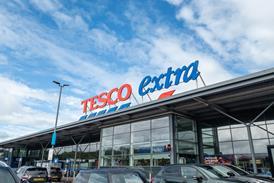
Tesco and Sainsbury’s also enjoyed continued sales momentum, with spending at the two biggest grocers growing 4.3% and 4.5% respectively.
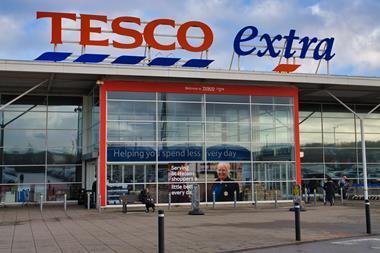
Market share for Tesco jumped 0.4 percentage points to 28.1% in the period, while Sainsbury’s share held firm at 15.5%.
Sales at Morrisons inched up 1.1%, while Asda sales dropped 2.4%. Sales also dropped 2.2% at the Co-op.
Aldi sales jumped 1.2%, Waitrose enjoyed a 3.8% jump in the period, while Iceland managed a 2.1% jump in sales.


No comments yet