













What will the high street look like in 2050? New research from American Express suggests a future shaped by localism, immersive experiences and seamless convenience. Dan Edelman, Amex’s general manager of merchant services, shares what this means for retailers and consumers alike
- Local over large: shoppers want high streets that feel personal, authentic and rooted in their communities, with independent businesses playing a bigger role than ever.
- Experience beyond transactions: retail spaces are set to become cultural and social hubs, blending shopping with entertainment, leisure and community connection.
- Convenience without compromise: from frictionless payments to smart fulfilment, consumers expect speed and simplicity — but not at the expense of human interaction.
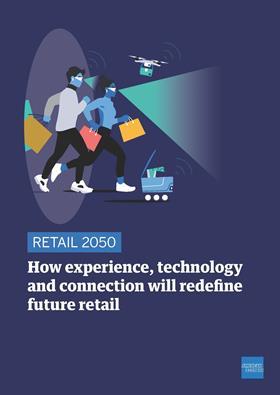
The retail landscape has always reflected broader changes in technology, society and consumer behaviour. We know the pace of transformation will only accelerate. However, Amex’s new research reveals that the retail sector of the future will balance technological innovation with the personalised service and community connection shoppers have always valued.
Our new Retail 2050 report explores how shoppers expect the next generation of retail to evolve, identifying three defining trends that will shape the sector’s future.
Independents: small shops, big future
Consumers are clear that they want the future of shopping to feel more local and personal. Two-thirds (66%) of respondents say they want to see more independent businesses on their high streets by 2050, signalling a continued appetite for the authenticity and individuality small retailers offer.
Shoppers are also seeking greater variety in how and where they shop. Over a third (34%) would welcome more pop-up stores to bring freshness and opportunity for new, smaller brands.
Technology will help facilitate an evolution of independents. Almost two-thirds (63%) of consumers say they would be more likely to shop with small businesses if they offered services such as click-and-collect or digital loyalty schemes. However, nearly a third (29%) warn that technology must not come at the expense of human connection. The retailers best placed to succeed will be those who use innovation to enhance, rather than diminish, the personal touch.
Immersive: shopping as culture
The research highlights a future high street that is as much about experience as it is about retail. Nearly half of consumers (49%) want town centres to evolve into one-stop destinations combining shopping, leisure and community spaces – much more so than today. Over half (54%) would like to see entertainment and retail blend more deeply, through market halls, live music, mini-festivals or pop-up theatres.
This growing appetite for immersive, multipurpose environments underscores a shift in how people view the role of retail. Increasingly, shopping is not simply a transaction; it’s part of how people socialise, relax and connect with their local community. Over a third (36%) of respondents would like to see more cafes, bars and social spaces instead of rows of identical shopfronts, while 56% support converting historic buildings into mixed-use retail and leisure venues that preserve character and heritage.
For those with a stake in the retail ecosystem, the opportunity is clear: to create experiences that attract footfall, encourage dwell time and build loyalty by turning everyday shopping into something more memorable.
Instant: convenience without compromise
Alongside the rise of localism and experience, convenience remains central to consumer expectations. Shoppers increasingly want retail experiences that are quick, seamless and intuitive, which we have termed “convenience without compromise”.
Six in 10 (60%) consumers already cite payment friction as a reason they might choose to shop elsewhere and by 2050, they expect seamless shopping to be the norm. Around two-thirds (64%) say till-free checkout is appealing, while 62% want to view items in a ‘showroom’ environment in-store, and quickly access via click-and-collect lockers.
Consumers also anticipate major advances in delivery and transport. More than half (54%) expect drone delivery to be commonplace by 2050, and 56% believe they will travel to retail destinations in autonomous vehicles.
For retailers, the challenge will be to integrate existing and emerging technology in ways that feel natural and human — ensuring that innovation enhances, rather than replaces, connection.
Looking ahead
While the forces shaping the retail landscape of 2050 may be different from those of today, consumers’ underlying priorities remain familiar. They want choice, convenience and community — and experiences that feel personal, intuitive and meet their preferences.
Retail has always responded with resilience and agility to consumer trends and external challenges. What our research shows is that the high street of 2050 will continue on this journey. The public’s appetite for shopping is undiminished, but how we shop will be transformed.
As a key partner to the retail sector, American Express is committed to backing businesses of all sizes and helping them thrive in this evolving landscape — helping retailers embrace innovation and deliver a great customer experience.

Dan Edelman is UK general manager, merchant services, at American Express