










Department store group Fenwick has delivered a significant improvement in financial performance, Retail Week can reveal.
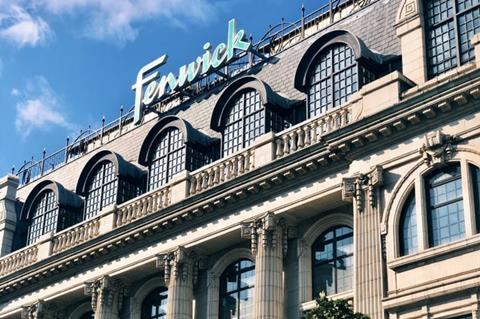
The family-owned retailer said that results for its last financial year showed “the effectiveness of the three-year strategy focused on sales and margin growth while driving cost efficiencies”.
Fenwick, which sells through eight branches including its Newcastle flagship and online, cut losses by £16.2m to £35.5m in the year to January 31.
Turnover was down just over £7m to £177m. However, the retailer sold and ceased trading from its store on London’s Bond Street in the year. Taking that into account, Fenwick’s sales rose 4.7%, or 3% like-for-like, and gross margin was 44.2%.
The retailer notched up “particularly strong sales growth” of 7.6% in its second half, and made operational cost savings of £11.2m.
Fenwick also repaid its £60m loan facility, resulting in a debt-free balance sheet and £84.9m in cash reserves.
Over the year, Fenwick said that strategic brand partnerships, such as with Barbour and Newcastle United Football Club, continued to be successful. It invested in infrastructure, such as migrating to a new online platform and opening a new beauty hall at the Newcastle store. In the current financial year, more such initiatives, such as the MyFenwick loyalty scheme, have been launched.
Fenwick chair Sian Westerman said: “These results mark important progress as we continue to reshape the business for long-term sustainability. The strategic changes underway are beginning to take effect, and the board remains confident in the direction being taken.
“While the retail environment remains challenging, Fenwick is becoming a more focused, agile business with a clear plan for profitable growth.”
Executive deputy chair Mia Fenwick said: “We’re evolving Fenwick to meet the expectations of a modern customer while staying true to what makes our brand distinctive.
“From digital improvements to reimagining the store experience, the strategic decisions we’ve made, combined with our operational transformation, are delivering real momentum. This was especially evident in the second half of 2024 and has continued into 2025. There’s more to do, but we’re on the right track and excited about the future.”


No comments yet