



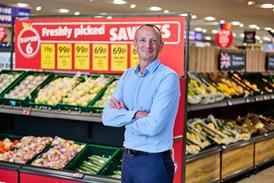

Uniqlo is quickly becoming one of the UK’s most in-demand retailers and after amassing almost 20 stores in the capital alone, it’s taking its expansion to more cities under the leadership of UK chief operating officer Alessandro Dudech

Alessandro Dudech, Uniqlo UK chief operating officer

Source: Uniqlo

Alessandro Dudech: ‘We’re not trying to rush. We want to make sure every store that we open is a meaningful addition to our portfolio’

Japanese fashion giant Uniqlo opened its 23rd store at Birmingham’s iconic Bullring earlier this month, its seventh UK location outside of London.

“We’ve spent many years focusing on London, but now the time has come to pick up the pace and really build connections in local communities,” says Uniqlo’s UK chief operating officer, Alessandro Dudech. 

He says the retailer’s newer stores outside the capital are “doing very well”.

“That’s why we keep opening new ones,” he adds jokingly.

Retail Week sat down with Dudech to find out more about the retailer’s plans for UK expansion, and why Uniqlo is so comfortable taking its time about it. 

Uniqlo Birmingham

Spanning 10,700 sq ft spread across three floors, Uniqlo Birmingham houses the brand’s complete LifeWear collection for men, women, children and babies.

Taking note of the city’s active and creative demographic, the store is one of five in the country to feature its UTMe! personalisation station and the second to include digital screens playing a continuous reel of ‘now trending’ content, highlighting how customers can style the brand’s clothing based on what’s popular.

Uniqlo has also partnered with independent bookshop How Brave is the Wren to install a reading nook in the expanded kids section of the store to acknowledge the growing number of families in Birmingham.

The store features a mural by local artists UUendy Lau and Hinz Pak that pays homage to the creative scene in the city.

Uniqlo Birmingham store front in daytime

Source: Uniqlo

Uniqlo has opened its 23rd store at Birmingham’s iconic Bullring shopping centre

Some people may think that the retailer’s regional push has only come about in the last couple of years. While that’s true in terms of a physical store, Dudech says the brand has long wanted to open a store in Birmingham. “It’s been a long time in the making,” he says.

“We have a digital presence here for our ecommerce [and] we definitely saw the huge demand coming. I’ve also heard that we had a gentleman who was literally petitioning for us to come for three years,” he shares.

“Being in the Bullring gives us a huge amount of visibility. Birmingham New Street [which the centre is attached to] is one of the busiest train stations in the country,” says Dudech.

“This is not just a new store, but it’s really an opportunity to become an integral part of Uniqlo.”

Slow and steady

It might surprise people to learn this isn’t Uniqlo’s first period of expansion in the UK. Perhaps more surprising is the fact that the first UK push didn’t go at all well.

The business landed in London in 2001 and quickly grew to 21 stores over two years. However, in 2003, the retailer pulled all but five stores after losses swelled to £20m on sales of just £14m the year before.

It’s vastly different from the retailer’s current performance. Uniqlo recently posted its fourth consecutive year of record global profits of ¥650.5bn (£3.2bn) in the 12 months to August 31, 2025, with sales topping ¥3.4trn (£16.7bn).

Mistakes of the past have undoubtedly played a role in Uniqlo’s current expansion. The retailer has averaged around three openings each year, with the steady momentum set to continue. 

“We’re not trying to rush ourselves. We want to make sure that every store that we open is a meaningful addition to our portfolio,” Dudech says. “We are making a commitment to the community for the long term and that takes time. The right location doesn’t just pop up magically.”

Uniqlo Birmingham second floor

Source: Uniqlo

Being in the Bullring gives Uniqlo ‘a huge amount of visibility’

Dudech shares that Uniqlo is getting the attention of landlords and is receiving approaches to join new projects and developments. 

The retailer has announced openings in Bristol’s Cabot Circus and a space along Leeds’ busy Briggate shopping street for next year. These follow stores in Glasgow and Edinburgh this year.

Dudech shakes off questions about how many store openings Uniqlo is targeting across the UK.

“We don’t work with targets like that because, when you have targets, that’s when you start rushing yourself [and] you start cutting corners, opening just for opening’s sake, and we don’t want to do that anymore,” he says.

As the company looks to grow its portfolio, it’s also keeping an eye on its existing stores and upgrading them when it sees fit.

“Some of the stores in our portfolio have been established for quite a while. If you think about what we’ve done in White City or in Bluewater, we’ve taken an existing store, closed it for a few months, and revamped it completely,” Dudech says.

Connecting with customers

Another big difference to Uniqlo’s UK expansion this time around is that brand awareness is significantly higher, partly boosted by the arrival of social media.

The retailer’s shoulder bag – dubbed the banana bag – is how most consumers first come across the brand after it went viral on social media for its Mary Poppins-like qualities.

The product, which is now available in a variety of colours, is often one of the bestsellers for Uniqlo when it opens a new store outside of London.

“The store has always been where we believe that the bulk of the brand discovery happens,” says Dudech.

Uniqlo Birmingham third floor

Source: Uniqlo

The store is one of five in the UK to feature a UTMe! personalisation station

“It’s about creating that omnichannel journey, enhancing the number of touch points, and making sure that every different touch point gives you something different and meaningful.” 

He notes that “right after we establish a physical presence, that’s when we really see our digital sales growing as well”.

Dudech and the Uniqlo team appear to have the store formula down to a tee, and it seems the slow-and-steady approach is the retailer’s sweet spot for building demand and catering to its growing consumer base.

Dudech concludes: “We’re really taking it one store at a time, and the more we open, the more learning we have, the more conversation we start, the more innovation then can come along. This model has served us well and we’re going to continue.”