












Menswear retailer TM Lewin is back in growth mode for the first time since its collapse in 2022 as it looks to restore its bricks-and-mortar portfolio.

The specialist opened two stores in 2025 in London, helping to contribute to the 40% uptick in full-year revenue. The business is also back in profit and saw sales surge 19% over in the run-up to Christmas.
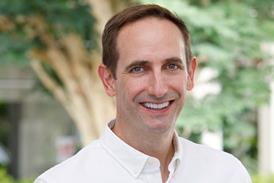
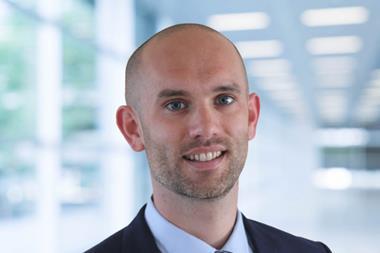
“We’re growing in a rapid trajectory, getting the brand back to where we want it to be, and hopefully we can continue that growth this year as well,” TM Lewin’s managing director Dan Ferris says.
Keen to share his plans for 2026, Ferris sits down with Retail Week to talk about how he’s ensuring TM Lewin is fit for the modern city worker, his plans to restore the store estate, as well as what we can expect next.
What are customers wanting from formalwear brands such as TM Lewin these days?
“What we’ve seen is, where professionals still know and love TM Lewin for the shirts and suits, it’s blurred the lines between what they wear on the weekend and what they wear in the office.
“In the 2010s, a customer would buy two or three different suits, which they rotate in their wardrobe. Now they’re just going for that top tier, one really good suit that they’re wearing in the office but also for weddings or other events. Then vice versa, what we’ve seen is items like colour shirts that have crept in from the weekend onto the weekday wardrobe.”
Could you tell me a bit more about the reset strategy the brand underwent since last year?
“Even before Covid, the trend was moving away from a suit and tie five days a week in the office. We’ve modernised TM Lewin while staying true to that 125-year heritage. We’ve retained the best of the product range from the previous iteration of the company and added on a lot more business-casual, smart-casual items that reflect how people dress and go to the modern office.”
In terms of sales mix, how is it split against the different categories from formalwear to casualwear?
“Shirts are still our bread and butter – that’s still about 50% of the business – but I think where we saw tailoring being a much larger piece of the business in the previous iteration of the company has fallen away a little bit. It’s still significant, but what we’ve seen is that those smart-casual categories are now more like 30% of our revenue now.”
“There’s no point in opening stores unless customers want it”
With TM Lewin back in profit, what are the opportunities for the business?
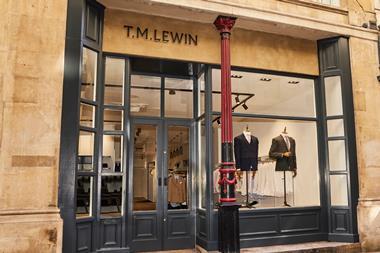
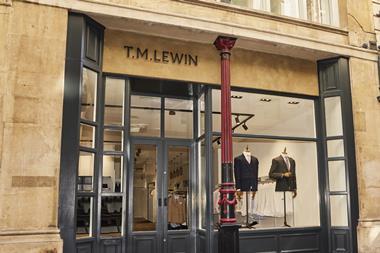
“We’re going to be opening up the store in about six weeks time. The store roll-out is going really well, and that’s really what 2026 is about for us, as well as continuing to expand the product range into categories where we know there’s demand from the things that we’ve tested in the past. We’re doubling down on that this year.
“The big one for summer is probably our polo shirts. We’ve reworked the collar, reworked the fabrics, reworked the fit, everything. So they’ll land in the next few months, and they’ll be big for us in summer.
“A big one for autumn/winter was introducing quarter zips to the range. We always sold Merino quarter zips – it’s a bit of a trend at the moment anyway – but we introduced various other options, like sweatshirts and whatnot, and next year we’re going to see expansion in that category.”
Do you have a target number of stores that you’d like to open and get a business back to?
“The previous business had around 66 when it went into administration. We’re never going to go that high in terms of a fixed number. If we can continue to open three or four a year, that’s where we’d be at and then we just need to assess where we are in a few years to see what customers want. There’s no point in opening stores unless customers want it.”
“There’s been a clear demand from ones we have opened, where they’ve been very successful, but we’ll never get back to 66.
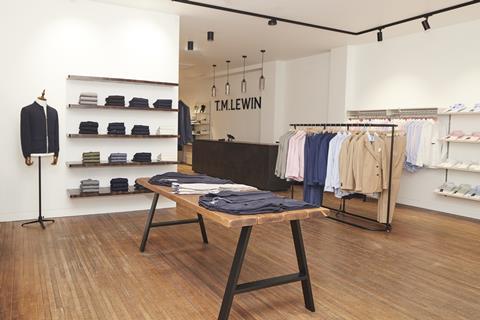
What type of locations are you targeting for store openings?
“Ones where we know our customers are. Bow Lane is the first one because we know there’s a strong city professional base. We’ve got the other city location coming for March, and it’s just where we feel most appropriate after that.
“If we want to target outside of London, we’ll be looking at somewhere like Manchester or Edinburgh. Likewise, if we want to continue to be in London, we’ll probably look at West End or additional City locations.
Did you discount much, or did you hold back?
“We had a winter Sale, and it’s still ongoing. Whether or not discounting is right or wrong, it’s what the customer wants and if a customer wants a discount and you can’t convert them at full price, then you can find ways to play to that. I think with the cost-of-living crisis, you need to adapt to what consumers want and if it does require promotional lead activity, then you’ve got to find the ways to make the margins work.”
There’s a lot of global uncertainty, specifically with the US. What kind of impact is it having on the business?
“The biggest disruption is in supply chains. When Trump was doing everything last year with all the tariff changes, that was probably the biggest impact on us, with these retaliations. It’s also not knowing how to plan that’s probably the biggest issue.
“We source our shirts in Vietnam, for example. If they’ve got a favourable duty agreement with the US, maybe Trump puts pressure on Starmer to change that. That’s where the uncertainty comes from.
“Then the knock-on effect is being able to book your trade and transport so boats don’t know if they’re going to be leaving on time, because you’ve got someone like M&S, who wants to hold it to find out what’s going on tomorrow with the tariff changes, so that’s where disruption comes in for us.”
No comments yet