
















The homeware market is shifting. Not with the slow ebb of seasonal trends, but with a surge of lasting consumer behaviour changes, notes Kleen-Tex’s Nick Coward
At Kleen-Tex, we recently published our Homeware Buyers Index 2025/26, and the message from consumers and retailers alike is striking: even amid rising costs and persistent economic anxiety, people are still investing in their homes. But what they expect from homeware products is changing – and fast.
Our report collated the insights of 500 retail-buying leaders and 1,000 consumers to assess the key trends, challenges and opportunities facing the soft furnishings sector over the next 18 months.
Here are five key trends impacting the soft furnishings market in 2025/6 – and how retailers can prepare for the next homeware boom.
1. Consumers are still spending – but they want more for their money
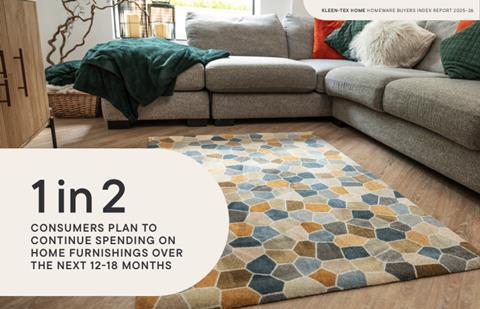
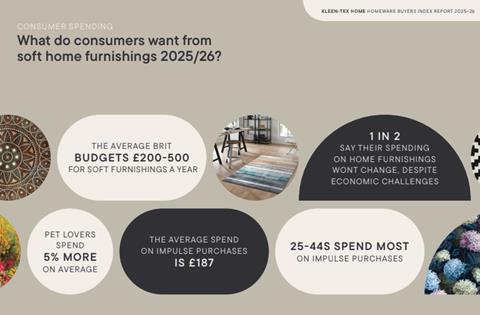
Despite rising living costs, more than half of UK consumers plan to maintain or increase their spend on soft furnishings in the year ahead. Most are budgeting between £200 and £500 annually, a figure that reflects not luxury, but prioritisation.
75% of consumers also shared they will shop for better deals as a purchasing priority and two in three will prioritise washable, low maintenance products to make their money stretch further.
Despite being price-conscious, 67% of consumers said they would be prepared to invest more in an item if they knew it was durable and of higher quality.
It’s clear the home remains a key emotional and functional space, and people are still willing to invest in it, but this isn’t about blind spending. It’s calculated, deliberate and expectation-driven – it also means retailers must offer products that deliver on both style and substance, or risk being left behind.
2. Retailers are ready to switch suppliers – and fast
The landscape for suppliers is becoming more competitive. Retailers can’t afford supplier complacency.
Import delays and weather-related disruptions are a top concern for 63% of retail buyers, meaning supplier reliability is key for retail buyer relationships.
Garden centre buyers, in particular, are among the most open to changing providers, with one in two ready to switch suppliers for better pricing, stock availability and sustainable innovation.
This highlights the pressure retail partnerships are under, with suppliers no longer able to rely on legacy relationships. Instead, they need to demonstrate reliability, responsiveness and relevance. Good margins, quick delivery and a forward-thinking product mix are now essential.
3. Washability and durability have moved from niche to necessity
Our Index demonstrates a demand for practical, everyday performance. More than 87% of retail buyers report increasing demand for washable soft furnishings, a stat that reflects the realities of modern households, where ease of care is paramount.
As an industry we’ve got to recognise that today’s consumers, especially younger consumers and pet owners, are less interested in “look but don’t touch” items.
They want products that work hard, last long and handle the pressures of daily life. So much so that consumers with pets are willing to pay more for the product, with pet owners spending 5% more on soft furnishings than the average consumer.
4. Sustainability is no longer a bonus, it’s a baseline
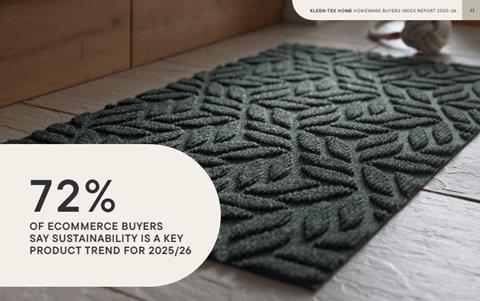
Consumers want to feel good about the products they bring into their homes. That means sourcing and manufacturing practices must be more transparent and more circular. Sustainability is no longer just a marketing angle; it’s central to value perception.
Retailers are also paying attention, with 63% of retail buyers prioritising suppliers with sustainability credentials, and those who greenwash or underdeliver will be quickly overlooked.
5. Seasonal and lifestyle buying is accelerating, especially among younger shoppers
Our report shows that younger consumers and pet owners are purchasing more frequently and more impulsively, reflecting lifestyle shifts, seasonal refreshes, and a desire for functional home updates.
Retailers that harness promotional cycles, trend-aligned ranges, and versatile SKUs will be best placed to respond. Supermarkets and garden centres are already leading in this space, using soft furnishings to drive basket value and shopper engagement.
Final thought: functionality over fast fashion
The Homeware Buyers Index paints a detailed picture of a category in transition, where buyers and brands are embracing functionality, innovation and flexibility to thrive. Those who don’t risk being left behind.
If there’s one takeaway from the Homeware Buyers Index 2025, it’s this: functionality has moved from a nice-to-have to a non-negotiable. Consumers want products that fit their lives, not just their living rooms.
Retailers and brands that innovate around real needs, such as hygiene, durability and sustainability, will shape the next chapter of homeware.
As someone who’s worked in homeware for years, I believe this is one of the most exciting times to be in the industry.
Yes, the pressures are real, with inflation, competition and shifting consumer habits, but so are the opportunities. If we listen carefully to what people actually want, we can build ranges that are more resilient, more responsible, and ultimately more rewarding for everyone involved.
The fashion-first approach will always have a place. But in 2025 and beyond, it’s functionality that will define success.
Download your copy of the Homeware Buyers Index 2025/26 on the Kleen-Tex website

Nick Coward is European sales director at Kleen-Tex.