









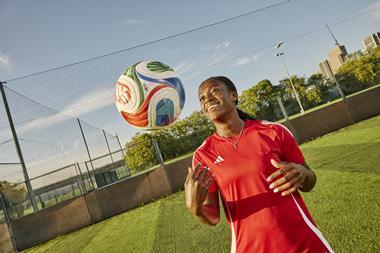
There are just a few weeks to go until the World Cup starts, and retail is hoping it might lift the glum mood that consumers are in
To some retailers, the World Cup could not have come at a better time. Consumer confidence seems to be slipping away fast, thanks to global instability, with another ruling party leadership battle at home unlikely to help things much.
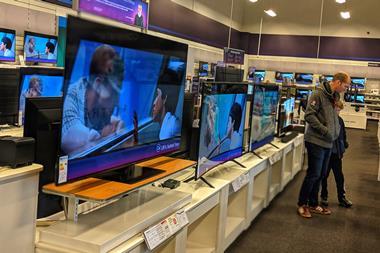
The latest BRC and KPMG retail sales monitor showed a 1.5% increase for March and April versus 2024 (the two months were combined to mitigate the early Easter), below the current rate of inflation. BRC chief executive Helen Dickinson said: “With the World Cup coming, retailers hope it will provide a lift, and early signs show demand for TVs and sound systems picking up.”
Can the World Cup give the retail world some momentum?
Lloyds Bank economist Hann-Ju Ho tried to answer the same question back in 2018 using retail sales volume growth in the May to July quarter versus the three months prior in World Cup years. He compared against non-World Cup years and found that the effect seemed to be pretty minimal (except in some categories like food, where growth was a percentage point higher).
It is great work, but I have adapted his methodology a bit as I thought that excluding European Championships was probably underplaying any football effect that existed. The World Cup is great and all, but I am personally just as excited/nervous/irritable when England gets through to the semi or finals in the Euros. Eagle-eyed readers may note that a European Championship year is also an Olympic year, so let’s call this the “summer of sport” (SOS) effect.
Sadly, given that it is the most recent one, I have had to omit the latest World Cup year (2022) from the stats as it took place across November and December.
Taking my alternative methodology, you get what seems like a much bigger SOS effect when you first run the numbers. Average growth in the “football tournament quarter” (FTQ) was 1.4% in championship years and 0.6% in non-championship years, a pretty impressive 0.8ppt lift in volumes.
And that reveals the second issue. Half of that growth rate is attributable to 2021, when the Euros coincided with Covid restrictions lifting, mass socialising resuming, and England getting through to its first-ever Euros final.
Take out 2020 and 2021, and then the uplift is a more modest 0.4ppt. Unfortunately, that removes two of the most recent tournaments, which is a flaw, but it does give us a good guide.
What do people buy more of in football years?
I must caution that none of these results is statistically significant, but the category detail is pretty fun.
Unlike the Lloyds analysis, I found basically no difference in food sales growth between SOS years and non-SOS years. Some categories, however, do go up, including fashion and electronics. In what might be a sign of joys being celebrated and sorrows being drowned, sales volumes at dispensing chemists do not fall away in the way they otherwise would from spring to summer, while sales of medical goods increase.
What might surprise you is that the ONS category “alcoholic drinks, other beverages and tobacco” typically sees lower volume growth in years when football tournaments are on. I imagine there is a bit of noise there, given that this category has been on a downward trend for years.
Indeed, Fraser McKevitt, head of retail and consumer insight at Worldpanel by Numerator, says that there is a definite positive trend with beer.
“Take-home beer stands out as the category with the most significant uplifts around major games, typically purchased the day before. The picture is less clear for soft drinks, pizza, and savoury snacks. Day of week and time of day are important factors – weekend evening prime time can deliver double-digit growth, while midweek daytime shows little to no uplift and may even see a decline, as people watch the game in the pub or near work.
“Although Worldpanel do not track out-of-home alcohol, food and soft drink sales in cafes, bars and restaurants tend to be up around 15% on days when England play – but only when those games fall on weekdays rather than the weekend,” he adds.
Dear England
I’m quite excited to see the TV adaptation of Dear England next week, having never caught the celebrated stage play. It tells the story of M&S brand ambassador Gareth Southgate’s stewardship of the England team, which coincided with its best run in tournament football since 1966.
We have already talked about the massive jump in sales volumes during summer 2021, but Southgate’s first World Cup in Russia back in 2018 also coincided with a very decent summer for retail.
At 2.6%, it was, until 2021, the biggest jump in sales volumes during a major men’s summer football tournament on record (stats start in 1988). The previous record before that was tied between Euro 1996, which Southgate also played an important (eep) role in as England reached the semis and Euro 1988, when Bobby Robson’s England took three losses during the group stage.
However, the magic seemed to have worn off by 2024, where the uplift was just 0.4% despite England’s second final appearance in a row (readers may remember it was a particularly prickly tournament, despite how far the team went).
Mike Watkins, head of retailer and business insight at NIQ, says that in addition to the weather, consumer sentiment and promotional activity, how long England (and Scotland) remain in the competition “is arguably what determines how big the expected sales uplift will be.”
Retailers will be hoping Thomas Tuchel and Steve Clarke can help bring a warm, early-Southgate-esque glow this summer: Have either of them got an official waistcoat supplier?

No comments yet