



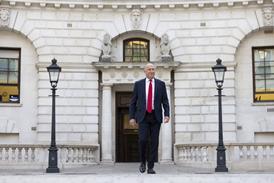
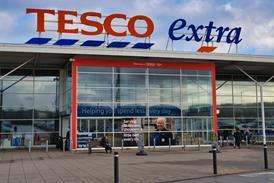











Tesco chief executive Ken Murphy shrugged off market concerns this morning after softer-than-expected first-quarter sales at Britain’s biggest retailer dented its share price.
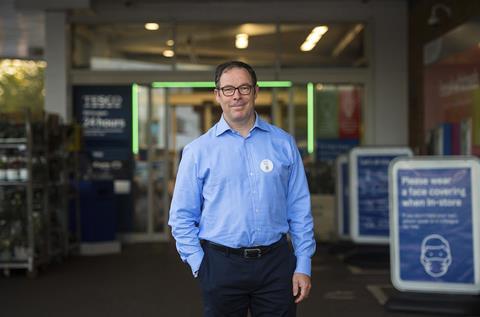
Murphy maintained that people should “not read too much into” the 1.8% increase in like-for-likes for the supermarket’s core UK business – down from a 5.1% jump last year – following concerns that consumers were pulling back amid the ongoing conflict in the Middle East.
“Our view is that although sentiment is subdued, we haven’t seen that translated into actual customer behaviour in terms of consumption,” he said.
Murphy noted that while the underlying behaviour of customers “hasn’t changed materially… the weather effect is a big deal”.
He said: “We had such an outstanding season last year. If you think about it, something like 22 out of 26 weeks in the first half of the year, we had sunshine.
“I think we probably had 22 out of 26 weeks of rain in the first half of this year, so it just feels very different.”
He said the market share gains and sales growth last year was “truly exceptional” meaning “the base is that much higher.”
“In that context, we should be feeling pretty good about our performance. And it’s not a sign of a slowdown per se, or really a change. It’s a very intensely competitive market. I wouldn’t read too much into it,” he added.
‘Unnecessary’ price caps
Murphy also dismissed concerns that inflation, in part triggered by the conflict in the Middle East, were to blame for the slowdown in sales growth.
“Food prices are incredibly competitive in the UK. I can’t predict what inflation is going to look like rolling forward, other than we’re going to be doing everything in our power to minimise the impact on consumers,” Murphy said.
During the quarter, Tesco rolled out its price match promise to more than 2,000 Express stores nationwide, introduced “thousands” of Clubcard deals and extended its everyday low prices commitment.
Murphy said the retailer’s measures to keep prices low had a positive effect on keeping a lid on rising inflation, noting Tesco’s figure was below last week’s 2.8% number from the Office for National Statistics.
“The truth is that the quarter one inflation this year for us was lower than quarter four last year. If you look at the rate from December to February versus March to June, the actual inflation rates dropped again in that first [quarter],” he explained.
“That’s good news for consumers, but that was the trajectory before the war in the Middle East.
“If you think about the [Middle East] region, it is not a big food producer, so you don’t have the same shock to food prices that you would have had when we had the invasion of Ukraine.
“Similarly, a lot of people, including a lot of our suppliers, were caught on the back foot without hedging on energy last time, and I think they’ve learned their lessons, so people are a lot better hedged this time around.”
World Cup fever
Murphy reported that World Cup fever was coming from both sides of the business. He said the group had seen “strong engagement” from suppliers, with exclusive launches from the likes of Budweiser, Walkers and Pepsi as they looked to get a piece of the action.
The tournament kicked off last week and Scotland played their first match against Haiti over the weekend, which saw sales of Irn Bru up 50% and cocktail cans up 185% ahead of the game.
Murphy said Tesco had extended the operating hours for its Whoosh rapid delivery service during both the England and Scotland matches “so that fans could get drinks and snacks straight to their door without missing a minute of the game”.
“We saw a real bump last night [when England played Croatia] between 6pm and 9pm, orders up 40%. Ironically, even though the game in Scotland was at 2am, we saw an even stronger increase in the orders in Scotland,” he said.
His comments follow research from insights company Circana indicating that supermarkets were unlikely to see a “bumper” uplift in spending during the World Cup compared to previous international tournaments.
“Conversely, though, I think that it will be fantastic for the country, both Scotland and England, if the teams were to do well. It would give the country a real lift,” Murphy said.
“It’s something that we’re hoping will come true and both teams have had a great start.”


No comments yet