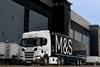













Marks & Spencer is to bring more biomethane-powered trucks on stream as it seeks to cut emissions from its logistics network.

Marks & Spencer will increase the number of ’bio-CNG’ trucks it uses by almost a third, rising from 210 to 300 over the next year.
The lorries, which will serve both the retailer’s food and fashion, home and beauty businesses, are expected to slash CO2 emissions by up to 85% compared to traditional diesel vehicles.
The switch in energy type is seen as “a key enabler” as M&S seeks to become a net-zero business by 2040.
To facilitate the change, M&S has signed a long-term agreement with CNG Fuels for mobile refuelling stations at distribution centres, providing daily capacity to refuel more than 300 trucks.
Bio-CNG is described as a sustainable, renewable fuel made from food waste and farming by-products such as manure.
Marks & Spencer transport director Julian Bailey said: “Moving to lower-carbon logistics with reduced dependency on diesel and the increased use of new technologies and lower carbon fuels is key to achieving our [sustainability programme] Plan A net zero ambitions.
“We trialled a range of technologies and have chosen bio-CNG as a key solution for decarbonising our logistics fleet as it is a proven, flexible and cost-efficient fuel supported by mature infrastructure.”


No comments yet