
















As the conflict in the Middle East deepens, City analysts and experts are warning of the profound knock-on effects the war will have on UK retail.
UK retailers have had to become experts in navigating global travel disruption, snarls in international supply chains, soaring freight and shipping costs, and rampant inflation in the years since the Covid-19 pandemic.
However, after the US and Israel launched joint strikes on Iran over the weekend, the sector is now facing the prospect of having to deal with all those things at the same time.
While the conflict was initially focused on Iran itself, in the three days since the first missiles were fired, fighting has mushroomed across the Middle East. International travel hubs such as Dubai have closed, international shipping lanes through the Red Sea and the Strait of Hormuz are being redirected and the price of oil, one of the major barometers of the international economy, is already rocketing.
What is perhaps most worrying for UK retailers is that all of this has happened in only a few days of fighting. Analysts and experts warn that the deleterious effects will only spiral the longer the war drags on.
“The current military action in the Middle East, if short-lived, will be recorded as a mere ripple in the waters that condition the UK consumer economy,” said Shore Capital analyst Clive Black.
“If the situation deteriorates in both geography and time, then there will need to be a corresponding review of the economic implications, noting that short-term travel plans and freight management are an inconvenience for those involved, for sure.”
Energy prices
UK consumer goods, on the whole, do not revolve around spot pricing, with most foodstuffs imported into the UK coming from the EU and not through the Persian Gulf.
However, grocers will likely be more directly impacted by the surging price of crude oil, which has already risen to nearly $80 a barrel. This “will feed into forecourt prices in the coming weeks,” said Black, which in turn will “ease back some of the recent benefits of falling essentials inflation in the UK”.
While prices are already rising, Retail Economics head of research Josh Holmes said the situation will only worsen depending on how long the fighting continues.
“Where it starts to matter is if energy prices stay elevated. Petrol prices adjust within weeks, and that feeds directly into household budgets. It doesn’t automatically push the consumer into retrenchment, but it does tend to make households more cautious, particularly around larger purchases,” he said.
Availability issues
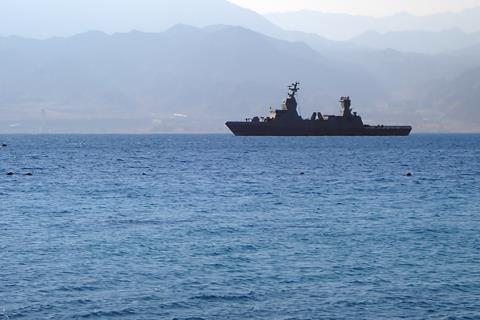
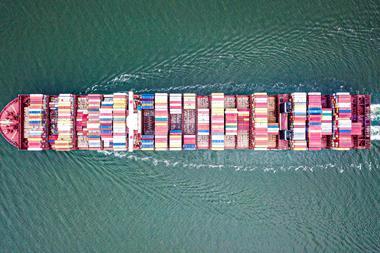
Global shipping lanes are also being affected. The Strait of Hormuz is reportedly closed to international shipping by Iran, while there are reports that major supply companies such as Maersk are halting and rerouting some shipping to avoid threats in the Red Sea.
However, despite this, one global shipping expert speaking on background said the impact to retail supply chains should be minimal, given that the sector has been dealing with issues around shipping in the region for a few years now.
“Little traffic, especially container ship traffic, has passed through the Red Sea/Suez Canal since late 2023, early 2024,” they said. “When Iranian proxies, the Houthis, started bombing the shipping lane.
“The rerouting via the Cape of Good Hope is already the primary route, so little change there. There was softness in the container ship/freighter market already, so this will stem the softness and support price increases but not to the extent we’ve seen in previous years. Supply is still outstripping demand”.
While the Strait of Hormuz has never been a major artery for container ship traffic, it is a major route for global energy.
BRC director of food and sustainability Andrew Opie said this would undoubtedly lead to higher inflation for UK consumers. “We saw this following the Russian invasion of Ukraine, when higher energy prices drove up manufacturing costs,” he said. “Since energy is a significant component of our production costs, sustained increases directly impact the prices of the goods we sell.”
Holmes added: “The immediate issue is one of cost rather than availability. The Strait of Hormuz is critical for global energy flows, but it isn’t a primary route for most finished consumer goods into the UK.
“So, this is more of a cost and confidence story than a stock or availability story. Higher fuel, freight and insurance costs squeeze margins first, and there is usually a lag before that shows up in shop prices, particularly where retailers have longer-term freight contracts or fuel hedging in place. The exception is food, where energy and agricultural input costs feed through more quickly.”
Travel retail grounded
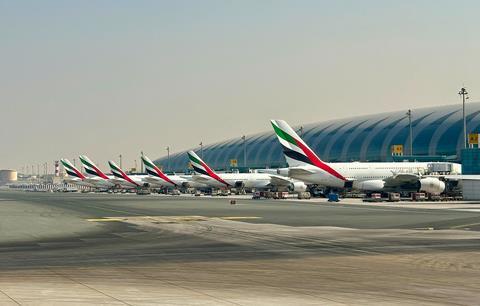
One of the most obvious areas being hardest hit by the conflict is travel retail.
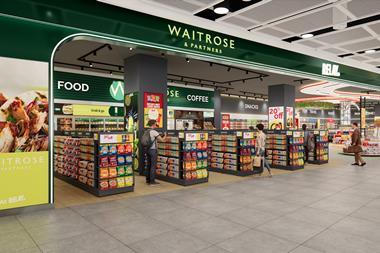
The outbreak of war in the Middle East, and the closure of so many travel hubs in the region, such as Dubai, Abu Dhabi and Qatar, heaps further pain on the likes of WHSmith.
Quite how badly this impacts the retailer will depend on how long the conflict rolls on and how long flights to the region are grounded, noted Investec.
“WHSmith’s Middle East operations are mainly franchised so the impact of closed airports in the region is likely to be minimal,” it said.
“There may be some impact from flight cancellations to its operations in Europe, Australia and Singapore, which are owned and operated, and generate a much higher cash contribution per outlet than a franchise. Any financial impact depends on whether the aggregate flight cancellations result in much lower passenger numbers for a sustained period.”
Another issue will be a drop in tourism to and from the region. Many UK brands have sought to take advantage of the UAE’s popularity with British tourists and emigrants, and a growing demographic of wealthy consumers, to open stores in the region.
Other brands, particularly in London, are geared towards Middle Eastern tourists travelling to the UK for shopping.
“If travel disruption persists or regional confidence weakens, that will add another headwind,” Holmes noted.
Airfreight will also likely take a hit, the shipping expert said. “Price spikes may occur if disruption persists,” they said. “Rerouting around the Middle East, and fewer planes in the sky due to airspace closures around one of the busiest transit hubs globally, means less capacity.”
Consumer confidence
What all of this likely means is that, whether the war is short or drags on, the impact on an already subdued UK consumer is likely to be bad.
The most recent GfK consumer confidence index noted a three-point drop to -19 before the war began.
Combined with deepening concern about the weakening of the UK labour market and rising unemployment, war in the Middle East could come as a hammer blow to consumers’ outlook for the year.
“The mood of consumers rarely improves in times of notable global geopolitical strife,” Black said.
Holmes agreed: “The broader risk is confidence. If global growth weakens and energy costs remain elevated, that would weigh on business sentiment and consumer confidence alike.
“Inflation had been easing and pressure on household finances was becoming less intense. A renewed energy shock could stall that progress and complicate the timing of interest rate cuts.”



No comments yet