














Argos is the first winner of the Digital Capability Index (DCI), a new ranking by Retail Week and The Grocer of 65 leading high street retailers based on how strongly their shopping features match consumer demands.
The everything retailer, one of the pioneers of omnichannel shopping, had the most features that matched with what consumers say they want when shopping both in-store and online.
The results reflect the sophisticated shopping operation at Argos, where customers can opt for same-day delivery, which is still something of a rarity among high street brands. It had the most-visited site of any of the retailers tracked in the DCI, according to Similarweb data shared with Retail Week.
Argos was also one of just two retailers, along with parent brand Sainsbury’s, that openly advertises British Sign Language as a customer service option. The data was collected in October and November last year, so does not reflect Argos’ recent decision to launch a marketplace, which would have increased its score further.
“This is brilliant recognition of our ongoing work to transform Argos – doubling down on fantastic products, at great value, with unforgettable ease and speed. This is what drives us every day,” said Graham Biggart, managing director at Argos.
“Over the last year, we’ve really invested to make our shopping experience fast and simple, and it’s brilliant to see people respond so positively. With over 1 billion website visits each year and a brand people trust, we’re excited to keep improving and investing with more products, more convenience and even better value for everyone.”
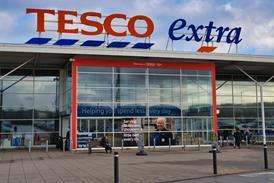
Just behind Argos in second place was Tesco, the strongest performer of the 10 supermarkets featured in the DCI. Britain’s largest retailer has long been an innovator, rolling out features like its own rapid-delivery service, a membership scheme for shoppers to save on online delivery and a marketplace online where consumers can order non-grocery products alongside their weekly shop (though with any orders fulfilled separately). Adidas, Ikea and Sainsbury’s complete the top five.
The new ranking, jointly assembled by Retail Week and The Grocer, combines research on capabilities like returns options, advertised delivery speeds and payment functions with a representative survey of more than 2,000 British adults by polling firm Find Out Now.
Each of these features has been divided into one of five sections and then weighted based on how strongly consumers say they valued it in the survey.
The five sections are:
- Order fulfilment (or grocery for supermarkets)
- Checkout and payment
- Customer experience and service
- Personalisation
- Web traffic, with data provided by Similarweb
This ultimately leaves each brand with a final score determining its place in the ranking. Instead of being scored on the order fulfilment category, which contains features such as click-and-collect and the ability to return online products in-store, the 10 supermarkets were instead scored on a special grocery category, tracking features such as scan-and-shop and advertised online delivery windows.
Data on website and app usage, as well as engagement, provided by leading digital analytics firm Similarweb, has also been used to inform the ranking.
The DCI is not a measure of digital strength, but of how much each brand’s advertised capabilities line up with what consumers say their priorities are.
As revealed earlier this year, consumers are advocates for loyalty schemes, strongly benefiting retailers like Tesco that offer personalised discounts across both its online store and network of supermarkets.
In addition to the ranking, the index showed a mismatch between consumer expectations and what brands can realistically deliver. In the order fulfilment section, the survey showed the most in-demand feature was free online returns, penalising businesses like fashion retailers, given the economics of free returns have proved increasingly difficult to achieve.
A lot of these expectations have arguably been set by the UK’s leading online retailer, Amazon, which does not feature in the DCI. Only brands with a branded physical store network have been included.
The survey also showed that whether brands offered generative AI features was not a priority at all for shoppers. For example, just one in 100 British adults said that a chatbot that can advise them on products is important to them when doing their grocery shopping. This means that the handful of brands that have rolled out their own customer-facing generative AI features do not add much to their final score.
Retail Week subscribers can access the full results, methodology and report, including the scores and rankings of the top 30 retailers, here.



No comments yet