








Jeans brand Levi’s has reported that net European revenues increased by 8%, or 10% on an organic basis, powered by its growing direct-to-consumer (DTC) business
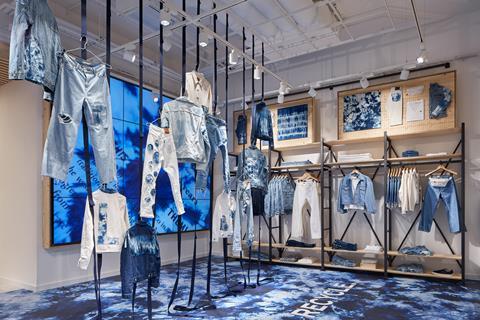
Worldwide revenues at Levi Strauss & Co were up 1% in the quarter to November 30, 2025, or 5% on an organic basis, which is when store closures, acquisitions and foreign exchange rates are factored out. That left Levi’s with a 4% increase in full-year revenue to hit $6.3bn (£4.6bn).
The figures reflect Levi’s increased focus on its DTC model. Revenues from direct sales were up 8% in the quarter, with ecommerce growing by 19%.
With wholesale net revenues declining by 5%, that meant nearly half (49%) of the company’s net income now comes from direct sales.
President and chief executive Michelle Gass said: “Over the past few years, we’ve taken bold steps toward becoming a DTC-first, head-to-toe denim lifestyle brand. While we still have important work ahead, the company is at an inflection point — emerging as a stronger, more resilient global business ready to define the next chapter of Levi Strauss & Co.”
Europe was the brand’s fastest-growing region, with sales in the Americas slipping 4% (increasing by 2% in organic terms) and Asia sales up 2%.
Gross margin also fell slightly from 61.8% to 60.8% in the quarter versus 2024, which the company attributed to increased tariffs, partially mitigated by price rises. Adjusted EBIT margin fell from 13.9% to 12.1%, but was up across the full year.
In its outlook for 2026, the firm said it expected revenue growth of between 5 and 6%, with a slight expansion in adjusted EBIT margin from 11.8% to 12%.
Chief financial and growth officer Harmit Singh said: “Our disciplined approach to converting growth into profitability has improved adjusted EBIT margin in 2025 for the third year in a row, and we are on track to expand margins further as we strive toward 15%.”
The company’s activewear arm Beyond Yoga, which it bought in 2021, made $46m (£33.4m) in the quarter, up 37% from last year.



No comments yet