














Shop prices will increase during the course of 2025 after the key festive trading period failed to meet expectations, according to the British Retail Consortium.
The latest BRC-NielsenIQ Shop Price Index reveals that the shop price deflation was 1% in December, up from 0.6% in the previous month.
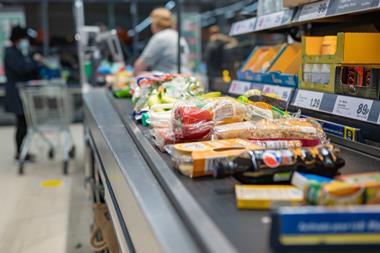
Food inflation was unchanged at 1.8%. This was in line with the three-month average rate of 1.8%.
Fresh food inflation was also unchanged, at 1.2%, slightly above the three-month average rate of 1.1%, and at its lowest since November 2021.
Meanwhile, ambient food inflation edged up to 2.8%, from 2.7% in November – in line with the three-month average rate of 2.8%, which was its lowest level since February 2022.
Non-food remained in deflation at -2.4%, edging down from -1.8% the preceding month. This was below the three-month average rate of -2.1% and at its most since April 2021.
The later timing of Black Friday in 2024 meant that the December 1-7 data period included the final days of the Black Friday discounting period (as well as Cyber Monday), while the Black Friday discounting period had passed by December 2023.
BRC chief executive Helen Dickinson said: “Retailers discounted heavily for Black Friday this year as they attempted to make up for weaker sales earlier in the year. However, the later Black Friday timing brought many of the non-food discounts into the measurement period, making non-food prices look more deflationary than the underlying trend.
“With food inflation bottoming out at 1.8%, and many price pressures on the horizon, shop price deflation is likely to become a thing of the past.
“As retailers battle the £7bn of increased costs in 2025 from the Budget, including higher employer national insurance, national living wage, and new packaging levies, there is little hope of prices going anywhere but up. Modelling by the BRC and retail CFOs suggests food prices will rise by an average of 4.2% in the latter half of the year, while non-food will return firmly to inflation.
“The government can still take steps to mitigate these price pressures, and it must ensure that its proposed reforms to business rates do not result in any stores paying higher rates than they do already.”


No comments yet