








Grocery inflation was unchanged last month, according to the latest figures from Kantar.
According to the market research firm, shoppers seeking bargains drove higher promotion sales within supermarkets, with items bought while on offer now accounting for 27.6% of sales.
Annual grocery price inflation was 3.3% in the four weeks to February last month, with sales rising by 3.6% during the period.
Kantar reported that prices were rising fastest in chocolate confectionery, chilled smoothies & juices, and butters and spreads, and were falling fastest in cat and dog food, laundry and household paper products.
With a spend increase of 9.6%, Ocado remains the fastest-growing retailer for the 10th consecutive month – holding its share of the market at 1.9%. Sales at Marks & Spencer climbed by 12.2% across its physical stores.
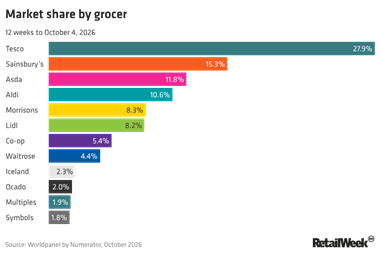
Sales at Aldi rose by 4.9%, the highest rate since January last year, giving it a market share of 10.3%, while Lidl’s share rose by 0.3% to 7.3%, compared to the same period last year, and sales increased by 8.1%.
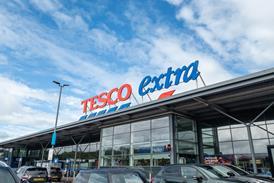
Sainsbury’s and Tesco remained in growth, with market share of the former increasing by 4.8% to 15.7% and the latter reaching 28.3% with an increase of 5.8% during the period.
Asda was the only major multiple to see a decline, with 5% wiped off its market share compared to the same period last year, now sitting at 12.6%.
Morrisons, Iceland and Co-op all increased their shares by 0.7%.
Kantar head of retail Sally Ball said: “It’s hard to untangle the cost-of-living crisis from any post-Covid analysis, and the other big headline of the past few years has been consumers’ hunt for value. You might think that people would shop around more to find the best deals but in fact, that’s not the case.
“Households visited just under five different grocers this month, the lowest level in February since 2021. The growth of supermarket loyalty schemes is partly behind this as shoppers use them to unlock exclusive discounts.
“Since Clubcard first hit the scene in 1995, Tesco has risen to become Britain’s largest grocer – up from second place 30 years ago. It now holds 28.3% of the market in the 12 weeks to February 23 2025, while its sales growth is at its highest since March 2024 at 5.8%.
“Retailer promotions helped to hold grocery price inflation steady at 3.3% in February 2025, as spending on deals rose again. Items bought on offer now account for 27.6% of sales, a rise of 0.3 percentage points from last year. Premium own-label lines also continue to be popular, growing at 13.3% this month, as people seek cost-effective ways to treat themselves.”
No comments yet