











Grocery footfall hit a five-year high in early June as customers resorted to shopping little and often as grocery prices and temperatures spiked.
In the four weeks to June 15, grocery footfall hit a five-year high as take-home grocery sales jumped 4.1% year-on-year, according to the latest grocery market share data from Kantar.
The increase in grocery footfall came as grocery price inflation hit 4.7% in the month, the highest level seen in the UK since February 2024 – up from 4.1% in May.
Kantar head of retail and consumer insight, Fraser McKevitt said: “Higher prices didn’t stop shoppers making 490 million trips to the supermarket over the latest month, averaging almost 17 per British household. That’s the highest we’ve recorded since March 2020.
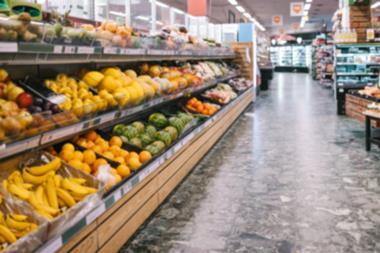
“As the sun tempted more people out, fresh fruit sales were one of the biggest winners. Consumers bought 2,400 packs of strawberries every minute in the last four weeks. People are trading up to more exotic fruits too, with sales of mangoes and blueberries climbing by 27% and 10% each.”
While customer frequency rose, it was balanced out by a dip in average spend, which fell back by 3p to £23.89. “Consumer concerns over price are continuing, and this is in the figures,” McKevitt said. “Sales of own label ranges grew at 4.2% this month, ahead of branded lines, as shoppers looked to balance their budgets.
“Deals also remain an important tool for retailers to offer value and the proportion of spending on promotion stepped up to 28.8% this period”.
Overall grocery sales fell by 0.4% during the period, the first year-on-year decline of 2025. Kantar noted a “small part” of this dip could be down to what it called “changing health priorities such as the growing use of GLP-1 weight loss drugs”.
“Supermarkets and grocery brands are entering new territory as weight loss drugs become more popular, with four in 100 households in Great Britain now including at least one GLP-1 user,” said McKevitt.
“That’s almost twice as many as last year so while it’s still pretty low, it’s definitely a trend that the industry should keep an eye on as these drugs have the potential to steer choices at the till. Four in five of the users we surveyed say they plan to eat fewer chocolates and crisps, and nearly three quarters intend to cut back on biscuits.”
Ocado’s growth continues
Ocado was once again the fastest-growing grocer with sales up 12.2% in the 12 weeks to June 15, 2025. This ongoing growth was driven by more frequent visits to the online store, and “strong performance” within its London and Southern England heartlands.
Lidl was the fastest growing of the bricks-and-mortars grocers, with sales jumping 11.2% – its third consecutive month of double-digit growth. Lidl’s market share hit 8.1% in the period, an 0.4 percentage point increase year-on-year.
Aldi, by comparison, increased its share to 10.9% as sales rose by 6.5%.
Tesco sales increased by 7%, while its market share increased by 0.5 percentage points to 28.1%.
Sainsbury’s share also increased in the 12-week period to 15.2%, with sales up 5.7%. Morrisons sales rose 2.2%.
Asda’s issues continued, with sales down 1.7%, however, Kantar noted this represents an “improving trend as the Leeds-based retailer looks to return to growth over the summer months”.
Waitrose sales jumped 5.5%, c-store specialist Co-op increased its share to 5.3% while Iceland sales jumped 1.9%. M&S grocery sales jumped 12% in the period.
No comments yet