








Food inflation dipped in August, but value remains at the forefront of customers’ minds as the UK headed back to school.
Grocery price inflation inched down by 0.1 percentage points to 4.9% in the four weeks to September 7 – the second consecutive dip in the last two months, according to the most recent grocery market share data by Worldpanel by Numerator.
For the period, take-home grocery sales jumped by 4.8%, driven predominantly by own-brand sales, which now make up 51.2% of all grocery sales.
“Prices might not be climbing quite as quickly,” said head of retail and consumer insight at Worldpanel, Fraser McKevitt. “But they’re still on the rise and the battle between own label lines and brands continues as household finances remain tight.”
Own brand sales jumped 5.9% in the period, ahead of a 5.3% increase in branded product sales. But both were outstripped by the 10.3% growth in premium own-brand products in the period, which marked the six straight month of double-digit growth.
However, McKevitt noted that branded products are “holding ground in some categories” such as toothbrushes, frozen chicken and baby toiletries, “showing that consumers still value well-known names across some very different parts of the store”.
The period also covered back to school, and was marked by a jump in spending on “lunchbox staples” such as yogurt, sliced cooked meats and cheddar cheese.
While the overall childrenswear market for back-to-school dipped over the summer, grocery retailers grew ahead of the market at 8.4%.
“The grocers clearly did their homework on back-to-school fashion,” said McKevitt. “Value is still at the front of shoppers’ minds, and retailers have tapped into this. Average prices have fallen, and buyers have increased their basket sizes as they aim to make the most of the discounts on the table.”
Customers also turned to the secondhand market in search of back-to-school deals, with 13.1% of schoolwear shoppers buying items pre-worn.
Tesco and Ocado leading the way
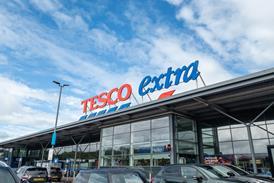
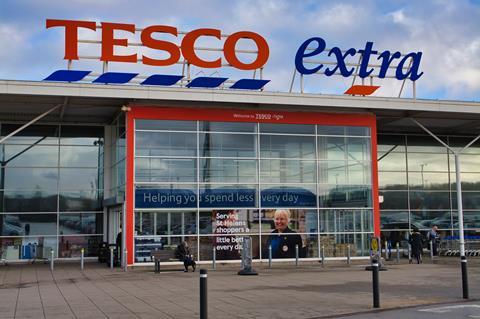
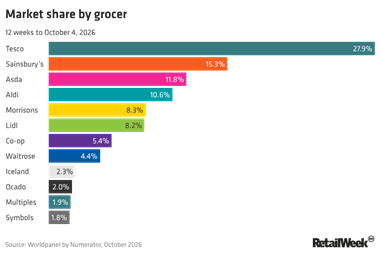
Supermarket giant Tesco won more market share than any of its competitors in the 12 weeks to September 7, 2025, while Ocado was once again the fastest growing of the retailers.
Tesco grew market share by 0.8 percentage points in the period, and now accounts for 28.4% of all grocery sales in the UK. It saw growth across all channels in the period, with spending up 7.7% – its highest rate of growth since December 2023.
Ocado sales soared 11.9%, outpacing the wider online food market which grew 8.2% in the period.
Sainsbury’s sales jumped 5.4%, increasing its market share to 15.1%.
Lidl was the fastest growing bricks-and-mortar retailer, with sales up 11%, while fellow discounter Aldi’s market share held at 10.7%.
Asda’s woes continued, with sales dipping 2.7% during the period, while sales at the Co-op also fell 2%.
Morrisons sales inched up 1.4%, keeping it just ahead of Lidl as the fifth largest supermarket in the UK for now.

No comments yet