












Online retailing should be simple. Customers click on products from your website, they make a payment and you drive it round to their house.
However, as many retailers soon discover, there are a myriad of operational issues and additional costs that come bundled with the online channel, and if these are not managed carefully, retailers can find themselves with an increasingly costly, if not a loss–making operation.
Research from Kurt Salmon showed UK supermarkets were losing an estimated £300m from their online grocery operations.
The relatively high margins and basket sizes of fashion retail should offer enough headroom to cover all the costs associated with home delivery while remaining profitable. The challenge is in identifying and measuring all these additional costs and making sure they are carefully managed.
Cost challenges
Most retailers are now familiar with the main online costs – customer acquisition (digital marketing), single picking of merchandise, home delivery logistics, returns, running the web platform, customer service and so on. Retailers have developed pretty robust models around these and are well on the way to “best practice” solutions.
But, as the multichannel model continues to evolve, new operational and cost challenges arise.
Take for example click-and-collect. Most retailers realised around 2012 that the “last mile” of home delivery was a killer in terms of costs, worse when you take into account returns and the second delivery attempt.
“While ‘click-and-don’t-collect’ will certainly reduce the costs of cancelled orders and all the messy return logistics around that, it brings with it all the new costs of a short window delivery via a third-party partner”
Dan Murphy, Kurt Salmon
In order to pass these “last mile” costs back to the customer, retailers came up with click–and–collect, or as the US calls it, BOPUS – buy online, pick up in-store. It has grown very fast over the last three years, many suspect because customers find the home delivery option so unreliable.
Click-and-collect brought some new operational challenges though – where do we store it in the store? What scanning technology do we need? Who gets the credit for the sale? What do we do about returns? But over time most retailers have figured out how to fix these.
New problems arising
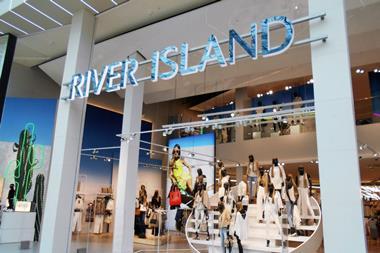
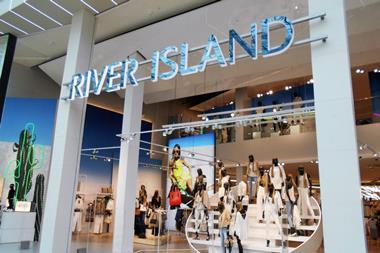
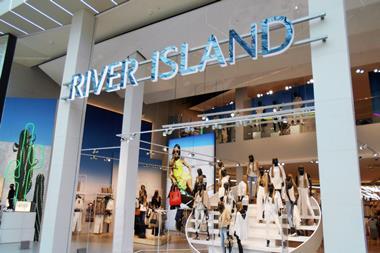
But wait, it turns out that as soon as we fix one problem another one rears its head. Now we have a new phenomenon called click-and-don’t-collect, launched by River Island, where customers buy online, select ‘collect from store’ and then realise they can’t get to the store, so they cancel the order and get it refunded.
According to Doug Gardner, River Island’s chief information officer, as many as 20% of the retailer’s click-and-collect orders get refunded. This is a huge cost and generates some considerable operational headaches – what do we do with the cancelled stock? What if it is not ranged for that store? Do we send it to another store or return it to the warehouse?
“As the multichannel world of retailing continues to evolve, as soon as we fix one problem another three replace it”
Dan Murphy, Kurt Salmon
River Island has responded to this with the click-and-don’t-collect service, offering these customers a 90-minute home delivery option rather than cancellation.
While this will certainly reduce the costs of cancelled orders and all the messy return logistics around that, it brings with it all the new costs of a short window delivery via a third-party partner. No doubt River Island has worked out the full business case for all these related costs and concluded that it is net profitable.
But it’s another example of how, as the multichannel world of retailing continues to evolve, as soon as we fix one problem another three replace it.


No comments yet