















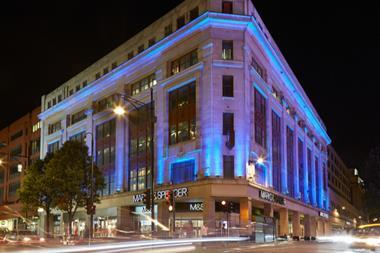
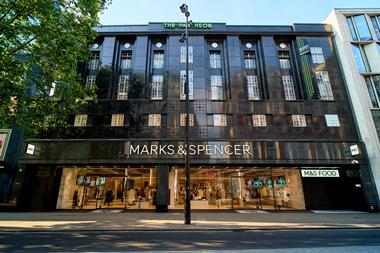
Marks & Spencer presented its newly transformed Pantheon flagship store on London’s Oxford Street on Monday, unveiling what it described as the blueprint for its full-line store renewal programme
The high street giant has been in the process of upgrading its fleet of Food stores and is now looking to do the same to the rest of its portfolio.
M&S chief executive Stuart Machin says the Pantheon on Oxford Street “is our first full-line flagship and our R&D store for fashion, home and beauty”.
“It’s where we’re testing how we make shopping our ranges easier, more curated and more inspiring, from clearer product moments to how the store looks and feels overall.”
Retail Week took a trip down to the central London flagship to check out how M&S is setting the blueprint for its future stores.
What’s in store
M&S has been busy transforming the four-floor 100,000 sq ft store for some time now.
Consumers will already be familiar with the foodhall that opened last year, and the new look womenswear and beauty department that launched in January.
The shopfloor is reflective of the progress M&S has made over the last couple of years in boosting its style credentials.
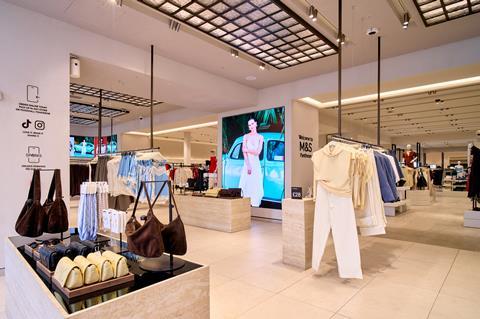
The business has increased the level of trend-led pieces in its collection and is updating more regularly, all while keeping its affordable ‘under £30’ price point without compromising on quality.
The upper two floors of M&S Pantheon are now back open, showcasing menswear, kidswear, lingerie and a new home concept.
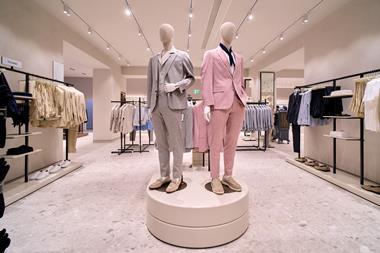
The first floor opens into menswear, which has received a long-overdue makeover and has been given 20,000 sq ft to play with.
The main focal point is the Autograph room, which sits proudly in the centre of the shop floor circled by the retailer’s formal wear, casual wear, underwear and footwear collections.
The second floor of the flagship houses a new lingerie concept, which opens into a space dedicated to the brand’s £10 bra styles.
There is also a dedicated Body by M&S room, which features a wall of busts showcasing the various fits, as well as separate areas for its Autograph and Rosie lingerie collections and hosiery.
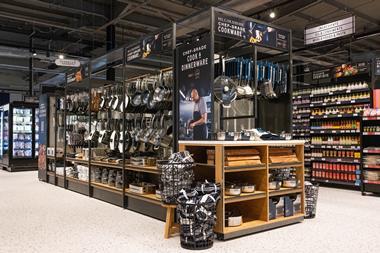
At the back of the shop floor is homewares, which has been moved from the basement level and turned into a destination space.
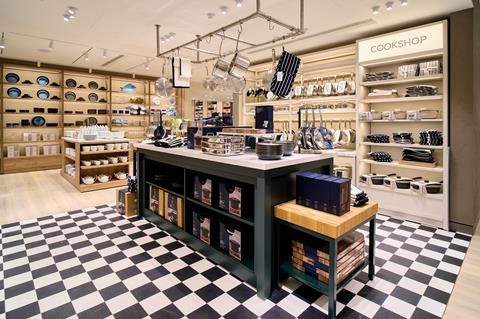
The product range has been overhauled and is set against a modern aesthetic of soft woods and metal tones.
Customers first walk into home accessories, which features pops of colour and is more trend-led.
To the left is the M&S x Kelly Hoppen homeware edit, an area that has been merchandised by the interior designer herself. While on the right, is a mock kitchen that houses M&S’ cookware range with chef Tom Kerridge alongside its own-branded products.
New concepts
The store is littered with features that are being tested and trialled by M&S. Retail analyst Natalie Berg refers to them as “surprises and delights” for the customer.
This includes different scents being diffused into homewares, depending on where you’re standing in the department, and a sink feature, where customers can try out the M&S Apothecary range.
“You can see that M&S have taken inspiration from best practice experiential brands in what they’re doing,” says Berg.
“That element of surprise and delight is so important in retail, especially physical retail, because you have to offer something that shoppers can’t get from a screen, and I think the [Pantheon] store really does that,” she adds.
M&S Pantheon is the first and only shop in the portfolio to feature a bespoke suits area, where customers can shop the full collection or design and personalise their own suit via an in-store iPad.
Prices range from £350 to £799, and can be delivered to the store in as little as three weeks.
Retail analyst Nick Bubb is skeptical about how popular the service will be: “I doubt there will be much demand for £799 bespoke suits.”
How will it translate?
Machin says the store is a good example of “our strategy to protect the magic and modernise the rest, holding on to the quality, style and value people know and trust us for, while making the experience more modern”.
It’s safe to say that the Pantheon store still feels very much like an M&S store – albeit bigger, brighter and better.
Berg says the retailer is “doing a brilliant job protecting their heritage while evolving to stay relevant, which is not an easy thing to do”.
“For a very long time, M&S had an identity problem and that fed through into everything they did: product, stores, digital. They were trying to be everything to everyone, but their transformation has just been remarkable.”
She notes that the Pantheon store is “probably appealing to a younger demographic on Oxford Street – younger than the average M&S shopper – [and] they’re going to be appealing to tourists”.
As such, she’s curious to see how it’ll be rolled out to other full-line M&S stores in the country.
Bubb is somewhat less enthused. “I found it a bit ‘white boxy’, i.e., the design scheme is very monochrome and I would have liked to see a bit more colour, albeit the product is the hero and M&S has clearly made big strides in that sense.”
From a consumer perspective, the store seems to be a hit. M&S found that 60% of those that came into the Pantheon had no intent to purchase something, but walked away with a shopping bag.
With the blueprint store now open and trading, all eyes are on how the format will translate to the rest of the estate.
As Machin puts it: “We’ve still got a lot to do modernising our estate, with 25 years of catching up to do. But Pantheon is a big step forward.”

No comments yet