















Retail has always evolved alongside changing consumer behaviour, but the pace of transformation retailers are facing today feels fundamentally different. Oracle Retail global vice-president of retail product, strategy and innovation Paul Woodward discusses what this means for consumers and retailers
Retail has always evolved alongside changing consumer behaviour, but the pace of transformation retailers are facing today feels fundamentally different.
Consumers are no longer judging retailers purely on price or product range. Increasingly, they expect experiences that feel fast, connected, personalised and effortless across every channel. They want accurate stock visibility, flexible fulfilment options and recommendations that are relevant and timely rather than generic.
At the same time, AI is rapidly raising expectations.
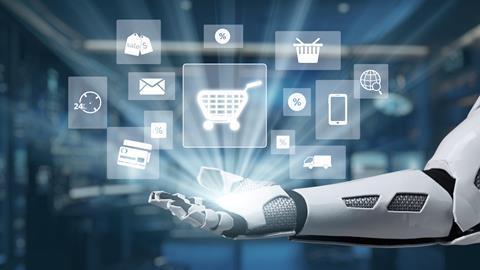
Consumers are already becoming accustomed to AI-powered experiences in other parts of their lives – from personalised entertainment recommendations to conversational search and predictive services. Those expectations are now carrying over into retail, where customers increasingly expect interactions to be smarter, faster and more intuitive.
For retailers, this shift is happening alongside rising operational costs, margin pressure, shrink and cautious consumer spending. The challenge is no longer simply attracting customers – it is keeping them.
Why disconnected experiences are becoming a bigger problem
Many retailers have invested heavily in ecommerce, loyalty programmes, store technology and supply chain transformation. Yet customer experiences often still feel fragmented.
A shopper may browse a product online, check local availability, receive a promotion and then arrive in-store only to find the product is not available or staff are unable to access previous interactions.
Customers do not see organisational structures or technology silos; they simply judge whether the experience works.
This is why many retailers are shifting focus away from isolated digital initiatives and toward connected retail strategies that unify customer data, inventory visibility, fulfilment and engagement in real time.
AI is becoming operationally essential
AI is no longer being treated as a future innovation project. Retailers are already using AI to forecast demand more accurately, improve inventory decisions, personalise promotions and support store associates with real-time insights.
The retailers seeing the strongest results are not necessarily those deploying the most AI tools. They are the ones connecting AI insights directly into operational decision-making.
That distinction matters. A personalised recommendation loses value if fulfilment fails, and even the best digital experience breaks down if stores cannot execute consistently.
Research from McKinsey suggests retailers implementing AI effectively are seeing improvements across forecasting accuracy, inventory optimisation and customer personalisation.
Source: McKinsey – The State of AI in Retail and CPG https://www.mckinsey.com/industries/consumer-packaged-goods/our-insights/the-state-of-ai-in-retail-and-cpg.
Where retail is heading next
At Oracle, we see the future of retail being shaped by connected, AI-powered experiences built on real-time data and operational visibility. Retailers that embrace automation and can combine operational agility with intelligent customer experiences will be better positioned to improve loyalty, efficiency and long-term growth.
Discover how connected AI helps retailers move faster, gain real-time inventory visibility and deliver more personalised customer experiences in the AI-Powered Retail: Tackling Today’s Top Challenges guide. For practical cloud and AI strategies shaping the future of retail, download the Oracle Retail Playbook.

Paul Woodward is global vice-president of retail product, strategy and innovation at Oracle Retail.
Consumers are already becoming accustomed to AI-powered experiences in other parts of their lives — from personalised entertainment recommendations to conversational search and predictive services. Those expectations are now carrying over into retail, where customers increasingly expect interactions to be smarter, faster and more intuitive.