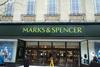













With CEO Marc Bolland under increasing pressure to get profits moving up at M&S, it is unhelpful to his cause that current year expectations have had to be notched down again, even though M&S promises to get its act together this autumn.
Cost control has again saved M&S from the embarrassment of a profit warning, but sooner rather than later M&S is going to have to deliver stronger top-line general merchandise sales and market share growth if it is to turn round its rather dismal profits trend.
M&S financial director Alan Stewart has pulled a ÂŁ30m cost saving rabbit out of his impressively flexible hat, by reducing the expected operating cost growth this financial year from 3% to 2%, which has limited the damage to the bottom-line from another weak performance in clothing sales at Christmas. It is hard to understand how he is able to keep doing this, but, as he âunpeels the onionâ of a big bureaucratic business like M&S, no doubt a lot of small cost saving projects can accumulate into something quite big. The fashion buyers still need their trips to the factories in the Far East, but booking their flights in advance no doubt saves some money, for example.
M&S Food did its bit to help Marc Bolland out at Christmas, although it may be clutching at straws to say that its performance was strong, with LFL sales up by only 0.9% (the same growth as Sainsbury) over the 14 weeks to early January.
But whatever time of day, or night, you read about the 3.8% LFL sales decline in general merchandise in the Christmas quarter for M&S, things donât look good, with performance badly lagging its peers. The only saving grace is that M&S has been able to maintain its guidance of a modest increase in gross margin across the UK business, claiming that it manfully tried to focus on full-price retailing ahead of Christmas.
In the long term, any successful retailer needs to have pricing power, like Next, and it remains to be seen whether Debenhamsâ constant discounting approach will work for ever, but M&Sâs high moral stance at Christmas on reining in clothing price promotions did not appear to pay dividends and it is not promising to be so restrained throughout 2013.
M&S has high hopes for its online business this year, but the 11% increase in its online non-food sales in the quarter is also a bit lacklustre to its clothing peers, even though M&S says the increase was 16% if the home business was excluded.
The upshot of all this is that City forecasts for 2012/13 pre-tax profits have ratcheted down to the ÂŁ650m-ÂŁ660m level, before exceptional costs, which is a disappointing setback against the feeble ÂŁ706m outcome for 2011/12. More worryingly for Marc Bolland, the market suspects that profits in the new year may not be much better, given the weakness of the UK consumer outlook and the weak momentum in the clothing business.
Of course, M&S promise jam tomorrow, once the new clothing management team gets its teeth into the ranging and pricing and merchandising of the business. If this doesnât do the trick this autumn, given the sheer weight of competition that M&S faces, shareholders will have to decide whether yet another change of CEO will make a difference.
Nick Bubb has been a leading retailing analyst for over 30 years. He is a well-known commentator on UK retailing and is a founder member of the influential KPMG/Ipsos âRetail Think-Tankâ.


No comments yet