















Wickes has reported a stronger than expected rise in annual profits and plans to significantly accelerate its store expansion plans.
The home improvement retailer posted adjusted profit before tax of £49.9m for the 52 weeks to December 27, 2025, up 14.4% on the previous year and ahead of market expectations.
Total revenues rose 5.9% to £1.64bn, driven by volume growth across both its retail and design and installation divisions.
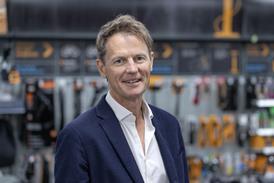
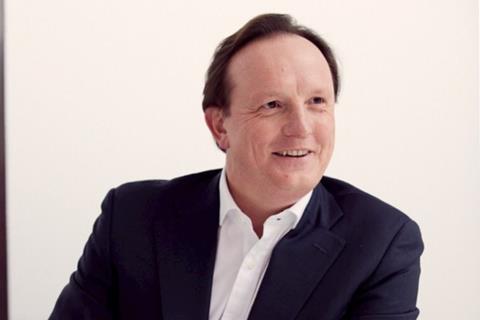
Chief executive David Wood said the results reflected “another year of strong progress”, adding that the strength of the group’s proposition continued to resonate with customers across its trade, DIY and installation businesses.
Wickes’ TradePro membership scheme, which offers discounts and rewards for tradespeople, grew to 643,000 active members, up from 581,000 a year earlier. Sales from trade customers rose 9% year on year. DIY sales also performed well, growing at a mid-single digit rate as consumer interest in home improvement held up despite cost-of-living pressures.
The group’s design and installation arm, which covers kitchens, bathrooms and solar panels, recorded its fifth consecutive quarter of ordered sales growth, with delivered sales up 6.1% in the second half of the year. Wickes said customers had responded positively to a simplified buying journey and increased availability of design consultants in store.
Q&A: Wickes chief executive David Wood and chief financial officer Mark George
These are record results for the business. What’s driving them?
DW: “What’s unique about our business in the broader retail environment is that this is all volume driven — more customers coming through the door, more DIY customers, more trade customers, more design and installation customers. So, all areas of the business are in growth, driven by volume. That gives us good operational leverage, which is why you see +6% on the top line and +14% on the bottom line. Despite the cost headwinds we’ve faced, we’ve delivered a really strong, profitable growth story.”
What has shifted in consumer mindset, particularly given that kitchens and bathrooms were slow at the start of the year?
DW: “On trade, we’ve continued to compound TradePro growth — 9% year on year. We’ve also broadened our DIY customer base, picking up less confident and younger DIYers, with good mid-single digit growth there.
“Design and installation is where we’ve made the really big interventions over the last 18 months — simplifying the customer journey; strengthening the proposition; providing clarity around good, better, best; and enhancing the installation service. Despite bigger-ticket items still facing a potentially negative market, we’ve taken more than our fair share. It’s a £35bn market and we’re a £1.7bn business, so there’s real room to grow.”
How are customers feeling about spending more broadly?
DW: “On trade, over 30% of our trade customers currently have a pipeline of work stretching more than a year ahead — that feels very healthy. On DIY, one in two consumers are telling us they plan to undertake a decorating project in the next 12 months. On design and installation, intent to put in a new kitchen or bathroom has definitely stabilised, and we’re outperforming that stable position.”
You’ve raised your store ambition from 250 to 300. Why now?
MG: “Two reasons. First, over the last three years, we’ve opened 13 new stores and proven that opening new stores, even in a tough environment, can be successful. Strong businesses get stronger through a downturn, and you have to be prepared to invest.
“Second, we’re increasingly confident about our ability to succeed in slightly smaller footprint stores. Our average store is 27,000 sq ft, but we’re now successfully operating in 15,000 to 20,000 sq ft. That opens up smaller towns and allows us to infill larger conurbations, which is why we now believe we can reach 300 sites.”
Will these be different, smaller format stores?
MG: “No. It’s the same Wickes format, the same number of SKUs. We’ve simply found a way to optimise the space in a slightly smaller footprint, which makes it more economic to enter different towns. It’s not a ‘Wickes Local’ or anything like that.”
You’re targeting 10-plus new stores a year from 2028. Are there operational risks in scaling that quickly?
MG: “We’ve got that well planned. We have an excellent property team, and it will take a little time to build the pipeline. This year, we’ll do four to five new sites, which is roughly the cadence we’ve maintained for the last couple of years. We don’t reach 10 per year until 2028, so we have time to build that capability properly.”
The results were accompanied by an announcement that Wickes intends to push its store numbers from 230 to 300 over the longer term – a target the company said would create more than 2,000 jobs. The rollout is expected to accelerate from 2028, when the group plans to open more than 10 new stores a year. Five stores were opened during 2025, four of which were former Homebase sites.
Wood said the returns from the store investment programme gave the board confidence to step up its ambitions. “We have today announced the decision to accelerate our investment for future growth,” he said. “Bringing Wickes’ distinctive offer to new locations up and down the UK.”
Looking ahead, Wickes said trading in the first 11 weeks of 2026 had been mixed, with wet weather dampening demand for outdoor projects, though indoor sales and design and installation continued to grow. The board said it remained comfortable with analyst consensus expectations of £57.6m in adjusted profit before tax for the full year.




No comments yet