





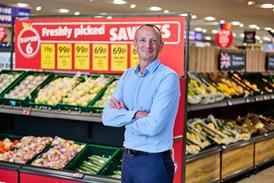




Marks & Spencer’s head of food has called on the UK government to set “concrete targets” to increase the amount of food produced at home, as the retailer set out new UK farming targets.

Alex Freudmann, the managing director of M&S food, said that the UK was becoming “less and less self-sufficient” in terms of food production, and reiterated the retailer’s support for British farming by launching its new 2030 Plan A for Farming.

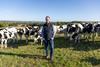
“If ministers are committed to domestic food supply, then they need to prove it,” Freudmann said at a launch event at one of the retailer’s dairy farms in Wiltshire on Friday. “That’s why we’re backing our farmers’ calls for a clear and concrete target to increase the proportion of food eaten in Britain that’s grown or reared in Britain”.

Freudmann said that presently less than half of the food eaten in the UK is produced here. Farmers say this percentage needs to be significantly higher to ensure the UK’s long-term food security, in light of growing climate change and global uncertainties such as war in Ukraine and Gaza.

“If [a target] was set down in law, just like the net zero targets are,” Freudmann continued. “It could tilt the balance towards farmers and decisions around planning or access to water, which incredibly painful to navigate today”.

Freudmann also said that the government should replace its grant funding systems with simpler incentives, introduce new training and apprenticeships to get young people into the industry and demand high food standards on imports as it does on UK produce.

As part of its Plan A for Farming, M&S has reaffirmed its commitment to sourcing 100% British across beef, chicken, pork and milk products.

It also highlights £14m investment in sustainable farming and innovation, and a new £7m of funding over the next five years for its ‘Farming for the Future’ programme.

The retailer has also made a new commitment that, by 2030, 100% of its M&S British products will come from farms which use regenerative farming practices.

“British food is the best in the world and at M&S, we’ve invested millions to support our farmers who produce it,” said Freudmann. “But the future of British agriculture can’t rest on industry alone. That’s why we’re backing our farmers in their call for government to step up – starting with a clear, legally binding target to increase the proportion of food eaten in Britain that is grown here. It’s time to turn warm words into action.”