






Sales picked up and price rises slowed to their lowest rate since 2024 in the four weeks to 12 July, a month shaped by record temperatures and a packed sports calendar.
Like-for-like grocery inflation eased to 2.6% in the four weeks to July 12, the lowest rate since December, 2024, according to data released on Tuesday by Worldpanel by Numerator. It marked the fifth consecutive month of cooling inflation, despite concerns about the Middle East conflict’s impact on prices.
Worldpanel by Numerator head of retail and consumer insight Fraser McKevitt said that the average household spent £5,530 on groceries over the past 12 months, up £156 on the same period a year earlier.
“A reminder that even as the rate of inflation cools, the cumulative cost of the weekly shop keeps climbing,” McKevitt said.
Take-home sales at the grocers accelerated to 3.3% in the four-week period, up from the 2.4% recorded over the previous four weeks.
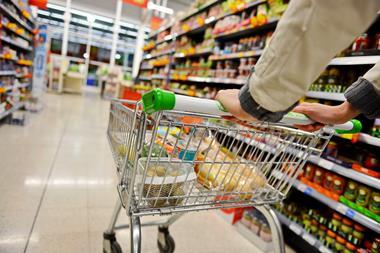
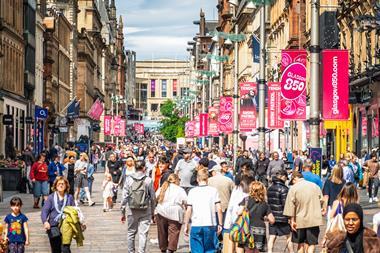
Shoppers not only bought more, they visited stores more often, averaging 17 trips per household over the four weeks or 497 million trips in total. This is the highest figure recorded since March 2020, the month that Britain entered its first lockdown for the Covid-19 pandemic.
Heat and the World Cup lifted drinks sales. Shopping trips that included a beer or cider purchase rose 8% year on year, while trips including no or low alcoholic drinks jumped 10%, outpacing the wider alcohol category.
Across match day and the day before each of the first three knockout matches, spending on beer rose 21% against the same days last year. The enthusiasm was not shared in Scotland and Wales, where the comparable rise was just 2%.
“Sport and sunshine combined to shape shopping habits this month, and England’s run in the tournament had a clear impact on the drinks aisle,” McKevitt said.
Other summer goods posted strong gains, with burgers up 25%, frozen lollies up 17% and bottled water up 23%. Wimbledon fortnight added its own seasonal boost, with £77m spent on strawberries and £21m on cream.
Branded goods sold 5.5% more than a year earlier, outgrowing own label for the first time since August 2025. Soft drinks, confectionery and ice cream led the shift, categories where summer demand and impulse buying typically favour big names over own label, according to Worldpanel by Numerator.
Lidl keeps gaining ground
Lidl gained the most market share over the 12-week period ending July 12, increasng 0.5 percentage points to take 8.8% of total spending at the grocers.
This cemented the discounter’s position as the fifth-largest grocer after overtaking Morrisons in May. Sales at Lidl rose 8.6% compared with the same period last year.
It was nevertheless a strong month for Morrisons as the supermarket returned to share growth, up 0.1 points to 8.5%, with sales increasing by 3.5% year on year.
Asda was the only major grocer to post falling sales, down 1.1% on last year, leaving it with the steepest share fall of any retailer. The result was still an improvement on the 3.6% sales drop it reported in June.
Co-op, recovering from last year’s cyber attack, grew sales 5.6%, its fastest rate since February 2021, lifting its share 0.2 points to 5.4%.
Ocado was once again the fastest-growing grocer, with sales rising by 14.1%. However, Marks & Spencer, which co-owns Ocado, saw its own grocery-only sales rise by 16% over the 12 weeks. This was the fastest increase seen since May, 2023.
Worldpanel by Numerator does not classify M&S as a grocer because clothing and general merchandise make up a large part of its sales.
No comments yet