















Retail sales improved in September as back-to-school and early Christmas shopping drove consumers to buy.
Total retail sales increased 5.6% year on year, compared with a 0.6% decline in September 2019, according to the BRC-KPMG retail sales monitor. This was above the six- and 12-month average declines of 1.1% and 1% respectively.
On a like-for-like basis, retail sales also improved by 6.1% compared with September last year, when they had decreased 1.3% from 2018.
Over the three-month period to September, food sales increased 5.1% on a like-for-like basis and 5.6% on a total basis, which was higher than the 12-month total average growth of 3.8%.
Sales of non-food items also improved – over the three months to September, retail sales of non-food items grew 5.2% on a like-for-like basis and 3.2% on a total basis.
For the month of September, non-food was in growth.
In-store sales of non-food items declined 12% on a total and 9.5% on a like-for-like basis, but this was far better than the six- and 12-month total average declines of 30% and 19% respectively.
Online non-food sales also increased by 37%, compared with a 3.5% growth in September 2019.
British Retail Consortium chief executive Helen Dickinson said: “September saw a big improvement in retail sales growth, however sales over the past six months are still down on the previous year. Tighter coronavirus restrictions have continued to hold back clothing and footwear, particularly as the government further restricts social events.
“With office workers still at home for the foreseeable future, the sales of electronics, household goods and home office products have remained high.
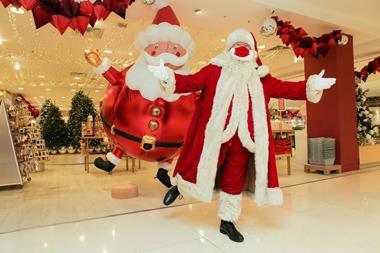
“September sales have also given retailers early signs that consumers are starting their Christmas shopping earlier this year, which retailers are encouraging their customers to do in order to manage demand at Christmas and keep people safe. However, store-based sales, excluding food are still in double-digit decline.”
“As we enter the all-important Golden Quarter – when many retailers make the majority of their annual revenue – the fight for survival couldn’t be more intense”
Paul Martin, KPMG
KPMG’s UK head of retail Paul Martin added: “Looking at the performance of specific retail categories, it’s clear that back-to-school activity gave fashion and footwear retailers a much-needed boost from lacklustre performance.
“Elsewhere though the focus remains on home-related items, including household appliances, furniture and technology. Online sales have eased slightly, but it’s clear that the convenience of the channel is so well engrained into the consumer’s psyche now and is therefore here to stay.
“As we enter the all-important Golden Quarter – when many retailers make the majority of their annual revenue – the fight for survival couldn’t be more intense. Close attention has to be paid to how players choose to tackle key events, like Black Friday, within a consumer landscape that has changed entirely.”
Consumer spending improves
According to data from Barclaycard, consumer spending also improved, rising 2% in September as warmer weather and back-to-school shopping spurred splurges.
Spending on essentials increased 6.1% year on year, with a 15% rise in supermarket expenditure as some consumers began to stockpile in case of shortages and a second lockdown in the coming weeks.
For the first time since February, spending on non-essential items grew, up 0.6% year on year, with key categories being home and DIY and furniture.
On the high street, face-to-face spending was down just 1.9%, indicating that customers are becoming more comfortable with in-store shopping.
Spend on clothing suprisingly saw a 4.2% growth for September as people invested in new seasonal wardrobes and prepared for children’s return to school.
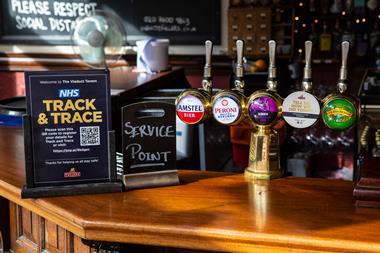
The hospitality sector also saw a boost, with spend up 9% at bars and resturants as 44% of consumers admitted to feeling “less cautious” about going to their local establishments.
“While the nation’s confidence in the UK economy has improved slightly, many are still cautious about the upcoming winter months, and the subsequent uncertainty it may bring has caused some to start stockpiling once more”
Raheel Ahmed, Barclaycard
The UK in general is the most optimistic it has felt about the UK economy since March at 24% – an improvement on the 19% seen in August – while confidence in household finances remains high at 70%. This is tempered, however, by more than a third expecting coronavirus or other economic changes to have a direct impact on their income over the next 12 months.
Barclaycard head of consumer products Raheel Ahmed said: “Consumers clearly made the most of the sunshine by socialising in September, with spending at pubs and bars seeing the first increase since before the national lockdown was introduced in March.
“However, we also saw households preparing to spend more time inside as winter draws closer, with home improvement increasing as a result.
“While the nation’s confidence in the UK economy has improved slightly, many are still cautious about the upcoming winter months, and the subsequent uncertainty it may bring has caused some to start stockpiling once more.”



No comments yet