




















General merchandise giant Argos is to move decisively away from its catalogue heritage as it bids to reinvent itself as a “digital retail leader”.
The retailer said its legendary catalogue “will move from its traditional position as the lead Argos channel into a supporting role” and its stores “will be focused on product pick-up and customer service for transactions that will increasingly be managed online or through mobile”.
About 75 shops - 10% of the estate - will be relocated or shut as their leases come up for renewal over the next five years.
The shift in direction follows a review of Argos by new managing director John Walden, who is leading its revival following years of tough trading during the downturn.
The new Argos strategy comprises four elements: a repositioning of sales channels in recognition of the ways digital technology is transforming retail; greater product choice and faster availability to customers; a product assortment with “universal” customer appeal; and cost efficiencies.The changes will be implemented over five years and there will be a £300m investment over the next three years.
Terry Duddy, chief executive of Argos parent Home Retail Group, said: “This plan provides the right approach for Argos to achieve a long-term sustainable performance and profit recovery.”
In the half-year to September 1, Argos posted benchmark operating profit down 3% to £3.3m on sales of £1.68bn. Like-for-likes advanced 0.6% over the period.
Multichannel participation rose to represent 51% of Argos’s total revenues and the Check & Reserve option accounted for 30% of overall sales. Visitor numbers to the Argos website were 440 million in the last 12 months, an increase of 6%.
The proportion of total sales from mobile shopping was 7% compared with 3% the previous year.
At group level, Home Retail reported sales down 1% to £2.53bn and benchmark pre-tax profit down 37% to £18m.
Argos to leave catalogue heritage behind
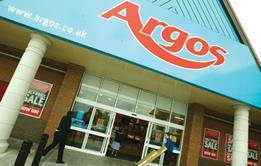
General merchandise giant Argos is to move decisively away from its catalogue heritage as it bids to reinvent itself as a “digital retail leader”.
 Currently
reading
Currently
reading
Argos to leave catalogue heritage behind
- 2
- 3
- 4
- 5
- 6






No comments yet