

















By continuing to use the site you agree to our Privacy & Cookies policy

The day the zombies took over

While the special effects were primitive by today’s standards, I still gasped in horror and woke up trembling during the night thinking of those vampires, giant insects or Frankenstein monsters sucking my blood, devouring me whole or kidnapping me.

What terrified me most of all, however, were the bug-eyed zombies and their avowed mission to take over the world. Who could have guessed that 2009 might go down in history as the year it actually happened?

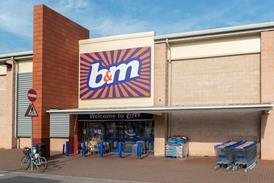
If you look around any retail park, it is not hard to spot the living dead, despite their best efforts to hide themselves behind window posters designed to imply business as usual. They are the companies that have collapsed, but continue to trade thanks to pre-pack administration or the new con trick of company voluntary arrangements.

These shameful devices give badly managed businesses a huge cost advantage over neighbouring retailers that have worked hard to trade solvently through the recession. I cannot get my head around why such incompetence should be rewarded at the expense of successful companies.

It is hard to totally blame those in charge of these failed organisations for taking advantage of a legal loophole that allows them to cling on to some sort of stuttering half-life. But I do blame landlords for being so short-sighted as to go along with it, clearly prejudicing the goodwill of their more valuable, successful tenants. If these landlords are prepared to slash costs for some tottering retailers, surely the same deal should be offered to us all?

The Government helped create this situation by levying substantial taxes on empty properties, tempting landlords to accept dubious covenants at give-away rents. Our rulers pressed ahead with this legislation despite warnings from all of those whose sight actually extended beyond the end of their noses.

Sadly this is typical of the ill-thought-through law-making in Britain today. Directives flood out of Brussels, often festooned with bells and whistles in Westminster, attempting to micromanage the smallest details of our lives from the type of light bulb we can buy to how much certain business sectors are permitted to pay their employees.

Millions died in the last century protecting our freedom and democratic system, yet everywhere I see the authoritarian screws tightening. Fortunately for us, there is no one at the top with the charisma or intellect to become an effective dictator.

But as I contemplate Gordon’s drooping jaw at the end of every sentence he utters, or Bob Ainsworth’s joke moustache, a chilling thought creeps into my mind. Perhaps when the zombies earmarked 2009 as the year of their world takeover, they chose to begin right here in Britain and started at the very top.

  • Lord Kirkham is chairman of DFS

Readers' comments (2)

  • Quite agree. I've been the victim of a certain furniture manufacturer from near Coventry going under and re-surfacing with a slightly altered name. The owner 'bought back' his original company for £90K when it was worth more than £500K. We had already despatched one truck full of exquisitely made chairs and were just about to send another (which still remain here unsold). The manufacturer is now facing liquidation, but rules are more stringent here in Poland and this means that he will probably lose his house and small factory. It does not seem right to me.
    I am an agent for various companies here, helping them export to the UK, but stories like the one I've described do not help my cause.

    Unsuitable or offensive?

  • In response to Lord Kirkham’s article “The day the zombies took over”, which criticises the use of company voluntary arrangements (CVAs), it is important to highlight to your readership that a number of central tenets of the argument are unsound and indeed misleading.

    While all insolvency procedures inevitably result in loss to creditors and are therefore unpopular, it is important to point out that the large majority of these procedures save thousands of jobs and rescue the viable part of businesses.
    JJB would be a useful illustration. The company’s financial strains were well documented in the media but it would be a somewhat mercenary stance to state that the whole store network should have been liquidated and thousands of staff laid off because the business was floundering.

    Setting JJB on a firmer commercial footing required tough conversations with lenders, the sale of the leisure business and asking the landlords of the loss-making stores to accept six months’ rent in return for the company’s release from their contractual liabilities. The process was long and painful for all concerned, but for the creditor group and the 7,000 staff this was a fight worth agonising over.

    The suggestion that a CVA in some way gives an underperforming business a competitive advantage is factually incorrect. A CVA gives all stakeholders the opportunity to discuss the best compromise in an open and collaborative manner.

    By contrast, a company that goes into administration leaves landlords and trade creditors in a worse position, with this group having little say in the process.

    An insolvency process that involves the wider creditor group in discussing the best way forward for a struggling business is a preferable option, particularly in an economic environment that will undoubtedly inflict more casualties. The last recession showed us just how far reaching the implications of widespread job losses and company failures can be. For this reason, we support the Government reforms to encourage the increased use of CVAs, effectively making administration the option of last resort.

    Richard Fleming
    UK head of restructuring,
    KPMG

    Unsuitable or offensive?

Have your say

You must sign in to make a comment.

Share this article

Connect with Retail Week

From store level to board room, Retail Week Knowledge Bank analyses company strategy, predicts intentions and details vital financial records across every retail sector

Retail Week newsletters

Supply Chain

Online retail

Latest news including ecommerce, m-commerce and social media

Read more

Stores Gallery

Stores Gallery

Store format innovations, store design trends and visual merchandising

Read more